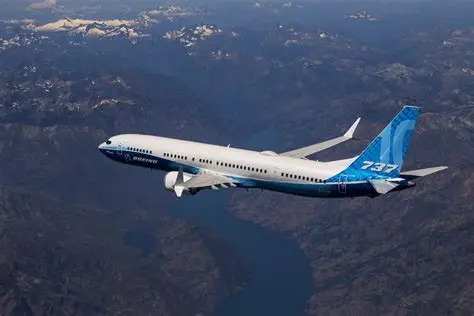
In a significant step forward for Boeing’s beleaguered 737 MAX program, the aerospace giant has advanced testing on its largest variant, the 737 MAX 10.
The aircraft program has moved into the second and final phase of Federal Aviation Administration (FAA) flight testing.
This milestone, achieved in early January 2026, comes after FAA approval was granted just before the Christmas holiday in 2025. It signals renewed momentum in a certification campaign plagued by years of delays.
Reported by the Air Current, the move positions Boeing closer to its target of obtaining type certification later this year.
This potentially revitalizes its competitive edge in the single-aisle jet market. The 737 MAX 10, designed to seat up to 230 passengers, first took to the skies in June 2021.
Boeing’s path path to certification for the -10 variant been anything but smooth. The program has faced multi-year setbacks stemming from the broader 737 MAX crises. This notably saw the 2018-2019 grounding following two fatal crashes that claimed 346 lives.
Regulatory scrutiny intensified, leading to extensive redesigns, particularly around the Maneuvering Characteristics Augmentation System (MCAS) and other safety features.
Additional hurdles emerged from supply chain disruptions, production halts, and technical issues, pushing the timeline far beyond initial expectations.
Phase 2 of the Type Inspection Authorization (TIA) flight tests, now underway, involves FAA-supervised evaluations of critical systems such as avionics, propulsion, and overall aircraft design.
This phase builds on prior testing, allowing Boeing to accumulate essential certification credits. According to industry sources, the tests are being conducted using Boeing’s dedicated fleet. This includes aircraft like N27751, which has logged routine flights as recently as December 2025.
Boeing executives, including CEO Kelly Ortberg, have expressed optimism about completing certification for both the MAX 10 and the smaller MAX 7 in 2026, emphasizing a focus on safety and regulatory compliance.
Despite this progress, challenges persist. A key unresolved issue is the engine anti-icing system, which requires further modifications to the nacelle inlet structure.
This de-icing problem has contributed to the delays, and its resolution is critical before final approval. The FAA has not yet extended similar Phase 2 clearance to the MAX 7, highlighting differentiated timelines within the MAX family.
Late 2026 Certification ‘Optimistic’
Industry analysts view late 2026 certification as an optimistic scenario, with entry into service possibly slipping into 2027.
Such delays could further erode Boeing’s market share, as the MAX 10 is intended to directly challenge the Airbus A321neo. The aircraft has dominated the high-capacity narrowbody segment for over a decade.
Boeing has secured approximately 1,290 orders for the MAX 10 from major carriers like United Airlines (277 units), Delta Air Lines, Southwest Airlines (108), and Alaska Airlines (105).
These airlines are eagerly awaiting deliveries to modernize fleets and boost efficiency on high-demand routes.
For Boeing, successful certification would unlock billions in revenue, estimated at over $40 billion from these orders. It would also help restore investor confidence amid ongoing financial strains, including production caps and quality control issues.
Looking Ahead
Looking ahead, Boeing’s 2026 agenda includes ramping up 737 production to 42 planes per month. The increase was approved by the FAA in October 2025. Concurrently, the U.S. plane manufacturer is addressing wider programs like the 777X.
The company is shifting toward “stable flow” in manufacturing, prioritizing quality over speed under Ortberg’s leadership. As flight tests continue, close collaboration with the FAA will be pivotal.
If all goes well, the MAX 10 could finally take its place in commercial skies, marking a turning point for Boeing’s recovery. However, any further setbacks could prolong the Airbus advantage