While crude oil and gas markets are trying to find their own footing, other crises are already on the horizon. At present, the global debate surrounding the closure of the Strait of Hormuz is framed through crude oil prices, Asian LNG demand, and Europe’s still fledgling security.
Yes, these are very visible shockwaves, but behind these media clouds, something else is hiding in plain sight. One of the most immediate and severe casualties of a prolonged Hormuz closure, or even worse a regional war, will not be a major industrial power but Egypt. North Africa/MENA region’s largest economy and political-military power is also a country whose economic stability, energy system, and political equilibrium are fully intertwined with global gas markets, but especially with the current fragile regional gas flows.
When Hormuz stays closed, QatarEnergy shuts down its LNG production entirely. At the same time, Israel’s offshore gas production is suspended, the country will not only be hit by an acute energy shortage but also by a systemic shock that has not yet assessed.
Any shock in Egypt will also have geopolitical consequences that extend beyond the Middle East.
This crisis demands urgent analysis, particularly given Egypt’s central role in maintaining stability across the MENA region and the Mediterranean.
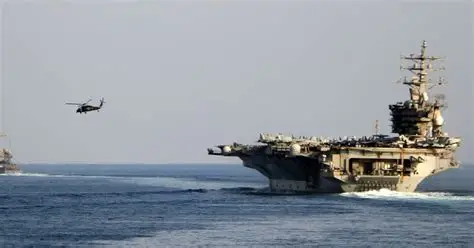
The military escalation in the Gulf — which could intensify further — has already severely disrupted maritime traffic. Iranian threats to shipping, amplified by the withdrawal of war-risk insurance, have pushed crude prices higher and contributed to a halt in output from QatarEnergy, the world’s largest LNG exporter, which accounts for roughly 20% of global LNG supply.
While the suspension is officially linked to Iranian strikes on key facilities, the effective blockade of the Strait of Hormuz and mounting maritime security risks are equally decisive factors.
At the same time, Israel has ordered a temporary shutdown of its offshore gas production in response to attacks and threats from Iran and its regional proxies. The combined effect is the removal of yet another critical source of Eastern Mediterranean gas supply.
Taken together, these developments — alongside the near paralysis of tanker traffic through Hormuz — represent not a routine market disruption, but a systemic rupture in the regional energy architecture