Midlands State University (MSU) has accelerated its commercialisation and industrialisation agenda following the expansion of its food and beverages unit, strengthened by the acquisition of new automated production equipment. This development marks a major milestone in the institution’s shift toward a fully functional industrial ecosystem driven by the national Education 5.0 philosophy.
The MSU Food and Processing Plant, established in 2021 at the height of the COVID-19 pandemic, was initially designed to meet the university’s internal supply needs. Over the past three years, however, the facility has transformed into a competitive revenue-generating enterprise aimed at supporting institutional sustainability and building industrial capacity within the education sector.
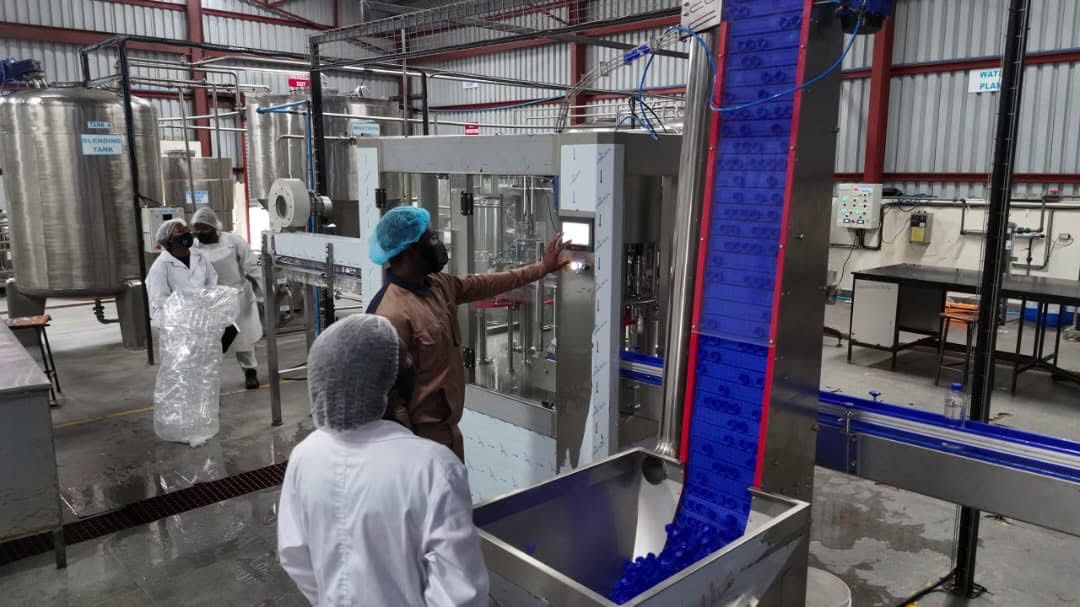
The plant’s evolution from manual operations to a fully automated production line reflects the university’s commitment to innovation and value addition. As one of four key MSU business units created to enhance productivity, the facility now stands as a model of Education 5.0-led industrialisation.
In an interview with the media, Vice Chancellor, Professor Victor Muzvidziwa, said the institution’s industrial efforts demonstrate the transformative power of Education 5.0 in driving national development.
“Education 5.0 is now making a tangible impact beyond our borders. This is a system anchored on innovation, driving industrialisation. We are commercialising innovations, protecting them through patents, and establishing production units, factories and workshops. This directly supports a critical pillar under NDS2, and we are confident the impact will continue to grow,” he said.
Executive Director of MSU Enterprise, Ms Patience Mangwiro, said the upgrades have significantly boosted production capacity and opened new market opportunities.
“We have increased our production capacity from when we started. Initially, we used manual processes, but now we have an automated line that produces about 3 000 bottles of juice per hour. We have also acquired pasteurisers to extend product shelf life. We began by servicing the MSU internal market, but demand quickly outstripped supply. With the Zimbabwe Standards Association certification now in place, we can supply wider markets. Importantly, we source fruits directly from local farmers, completing the value chain,” she said.
The expansion is not only increasing output but also strengthening MSU’s linkages with local communities. By sourcing fruits from surrounding areas, the university is reinforcing government’s inclusive industrialisation thrust and supporting rural economies through agricultural value chains.
The expansion of the MSU beverages plant underscores the strategic role tertiary institutions play in Zimbabwe’s broader industrialisation agenda. By combining innovation, skills development, research and production, universities are increasingly becoming economic actors capable of driving national value addition and fostering sustainable growth.
MSU’s industrial push affirms that academic institutions are no longer just centres of learning, they are engines of innovation and industrial productivity. As automation boosts efficiency and market reach, the university is setting a benchmark for how education can directly contribute to national development, economic competitiveness and job creation.