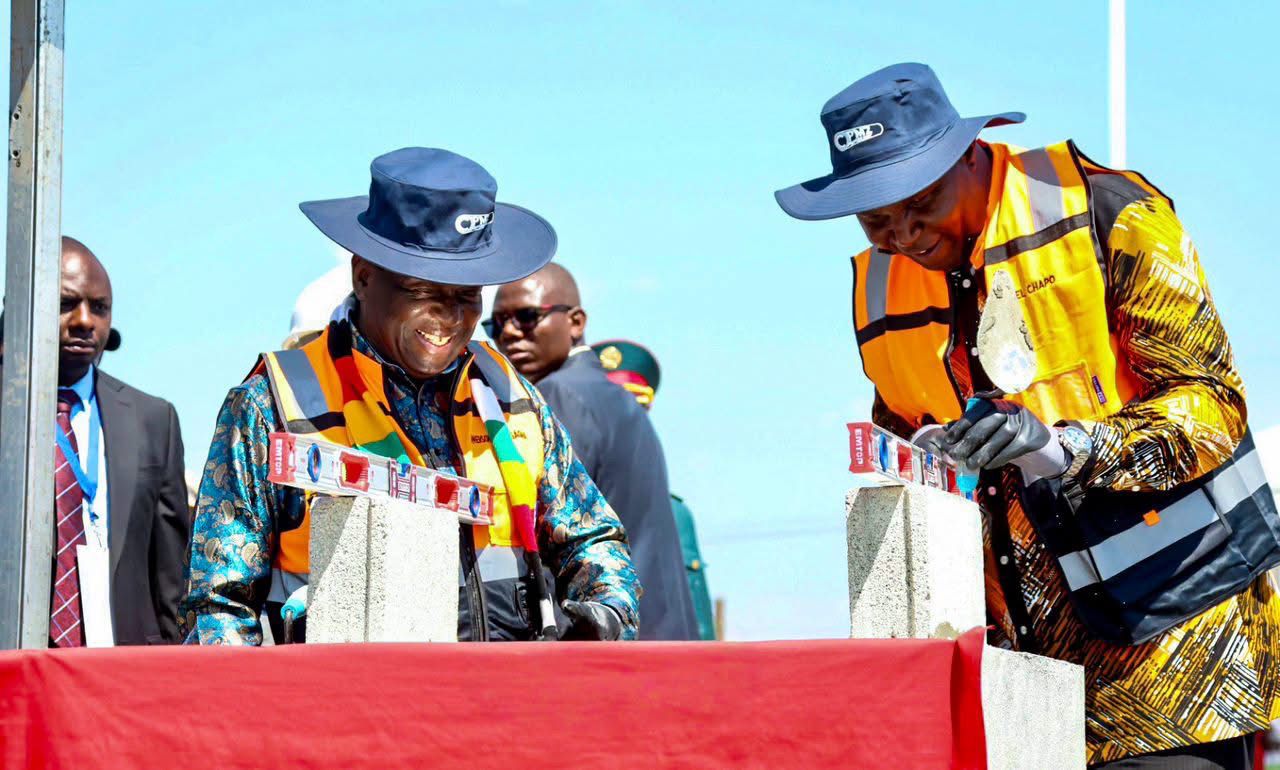
President Emmerson Mnangagwa today officially launched the Zimbabwe National Artificial Intelligence Strategy 2026–2030, at the New Parliament Building in Mt Hampden.
In his keynote address, President Mnangagwa emphasized the need to strengthen Zimbabwe’s digital infrastructure and technological sovereignty.
“The Zimbabwe we all envision must be a digitally robust and agile state. We have a duty to embrace emerging technologies to unlock numerous AI-driven opportunities that will drive modernization, industrialization, and sustainable economic growth,” he said.
Describing the strategy as “a declaration of our collective readiness for the transformative impact of artificial intelligence,” the President added that it represents a bold response to the disruptive effects of rapid technological change.
He highlighted AI’s potential to transform key sectors, including agriculture, mining, healthcare, finance, and education.
“In the public sector, flagship projects will be rolled out in precision agriculture, predictive healthcare diagnostics, smart mining operations, and AI-driven systems to improve service delivery and, most importantly, fight corruption,” he said.
President Mnangagwa also underscored Government’s commitment to ethics and regulation.
“We are establishing a robust legal and ethical framework for AI development and deployment in government, including national guidelines on data privacy, fairness, and accountability. Our aim is to ensure AI is human-centric, transparent, and free from bias, safeguarding national interests and the dignity of all Zimbabweans,” he said.
On private-sector engagement, the President pledged incentives for businesses to adopt and scale AI solutions.
“Our government is ready to support companies that integrate AI to enhance efficiency, productivity, and innovation. Public-private partnerships will be critical to realizing the full potential of this strategy,” he added.
He further stressed the importance of international collaboration.
“Zimbabwe must adopt best practices, attract responsible investment, and actively participate in the global dialogue on the future of artificial intelligence. This strategy marks a new chapter in our country’s development journey,” President Mnangagwa said.
Meanwhile, Minister of Information, Communication, Technology, Postal and Courier Services, Tatenda Mavetera highlighted the strategy’s alignment with Education 5.0 and the focus on human capital development.
“We will strengthen skills development from primary to tertiary levels, prioritizing STEM, coding, and data literacy. Centres of excellence in AI will be established in higher and tertiary institutions, supported by research funding and attractive career pathways for specialists,” she said.
Minister Mavetera also stressed the urgency of operationalizing the Data Protection Act to safeguard AI infrastructure and computational sovereignty.
“We will scale up open data initiatives, secure data marketplaces, and invest in digital infrastructure, including cloud computing and high-performance computing centres. These steps will empower our research and development ecosystem and align with enterprise-driven Education 5.0 priority areas,” she said.
The strategy comes as Zimbabwe seeks to strengthen its digital infrastructure, expand human capital development, and integrate artificial intelligence into both public and private sectors.
Anchored on four critical pillars, it is aimed at accelerating economic growth, promoting transparency, improving service delivery, and positioning Zimbabwe as a competitive, knowledge-driven economy.
President Mnangagwa launches Zimbabwe National Artificial Intelligence Strategy 2026- 2030