The Government has announced a plan to achieve full domestic rice production within five years, supported by expanded seed systems, farmer support programmes, and international partnerships aimed at scaling up national output.
Speaking during a two-stop agricultural field tour in Harare and Mashonaland West, Permanent Secretary in the Ministry of Lands, Agriculture, Fisheries, Water and Rural Development, Prof Obert Jiri, said the strategy had been finalised and implementation was underway.
Speaking at Rainham Farm in Dzivarasekwa and later at Holland Park Farm in Chinhoyi, Prof. Jiri said the programme targets a development of up to 50 000 hectares of rice production across the country.
“Our strategy is to ensure that within five years we are able to produce all the rice we need in the country. The strategy is clear, it is approved, and the partners who are supporting us are on board,” he said.
He said Zimbabwe would focus on upland rice varieties suited to local conditions, avoiding flood irrigation systems used in some Asian countries.
“In the Middle East, they flood the areas for rice production. Here, we are not going to flood. We use upland rice varieties, which require less water,” said Prof. Jiri.
The Government said it is working with international partners, including Japan, to support rice genetics, seed development, and technical training. Seed multiplication programmes are also being scaled up to ensure adequate supply for commercial production.
Prof. Jiri said Zimbabwe was capable of replicating successful models from other African countries that have achieved rice self-sufficiency.
“Tanzania is now self-sufficient in rice production. What Tanzania can do, we can also do in this country. The farmers are there. The land is there,” he said.
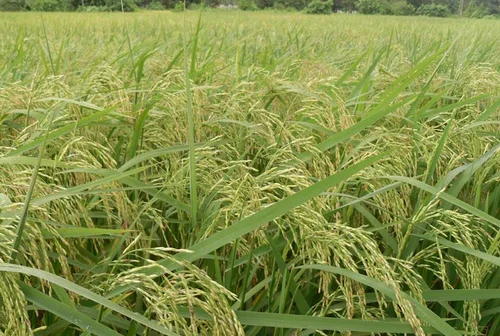
At Rainham Farm, smallholder farmer, Bongani Moyo demonstrated his 1.3-hectare rice project, where he has been cultivating Nerica rice varieties over the past five years alongside maize.
He said improved soil management and fertiliser use had significantly increased yields.
“This is a model that we can replicate for the whole country,” said Mr Moyo, noting that some varieties were yielding up to five tonnes per hectare under improved management.
He also highlighted the commercial potential of Kilombero rice, which he said was gaining popularity in local markets due to its cooking quality and higher value.
At Holland Park Farm in Chinhoyi, farmer Dr Kudzanai Vere reported strong maize performance this season despite a late dry spell that affected parts of the crop.
“We are expecting almost eight to nine tonnes per hectare. Generally, I think we have done very well,” he said.
Farm manager Alex Janasi said harvesting was underway, with efforts focused on drying maize quickly to prepare for winter wheat planting.
Across the country, early crop assessments indicate an improved agricultural season compared to last year, with gains in maize and traditional grains. Government says focus is now shifting to winter wheat production and scaling up rice as a strategic food security crop.