
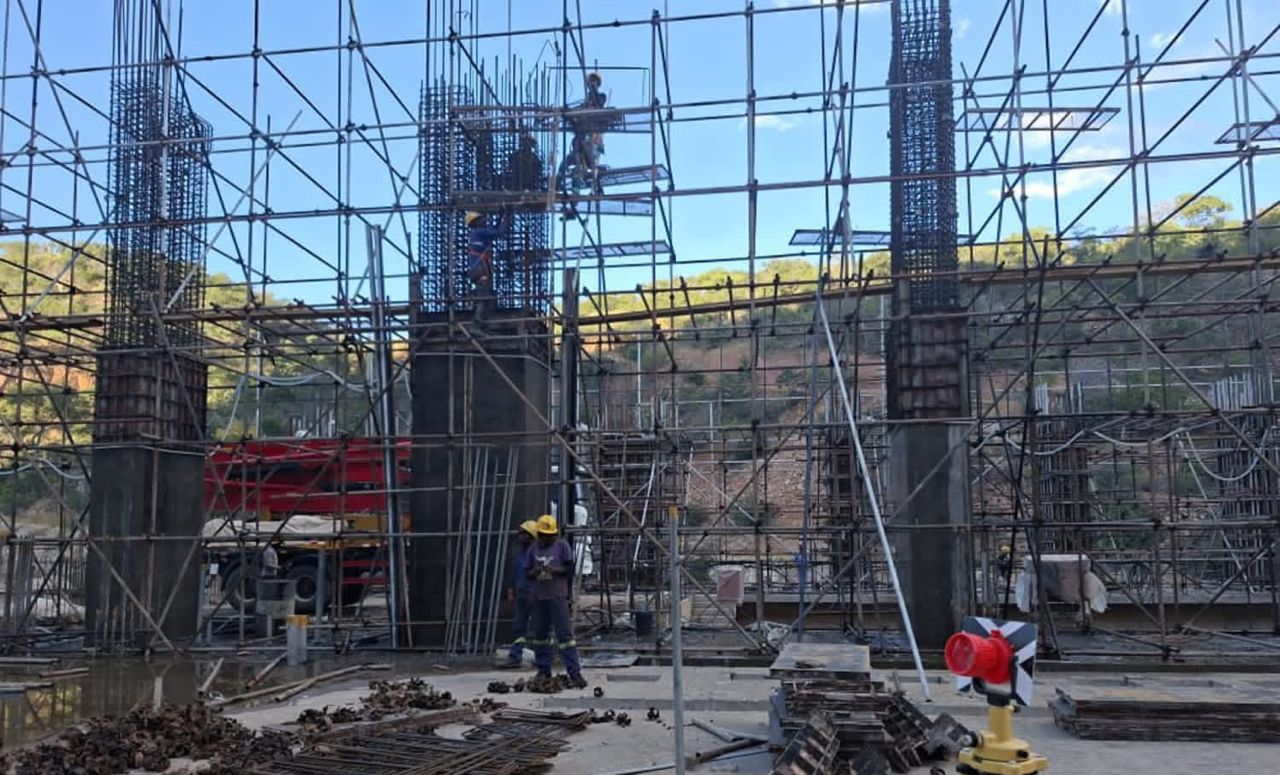
The Gwayi-Shangani Lake project, a cornerstone of the Matabeleland Zambezi Water Project, has moved into the civil works phase for a 10-megawatt mini-hydro power station, marking a significant step in efforts to address water shortages and energy supply in the region.
Engineer Mavis Jongwe said the development integrates water provision, power generation and agricultural support.
“The Gwayi-Shangani Lake project is a key element of the Matabeleland Zambezi Water Project, addressing water scarcity and energy needs in the region,” she said.
“The project has entered the civil works phase for a 10MW mini-hydro power station, which will also assist in providing bulk water supply.”
She said major works include construction of the powerhouse, installation of turbines and generators, and development of a 132kV transmission line to feed into the national grid.
“Strategically, the project supports national renewable energy goals and establishes a water-energy-food nexus, with plans for a 245km pipeline and 10 000 hectares for irrigation,” said Eng Jongwe.
“Local communities are also set to benefit from improved access to electricity and irrigation.”
Community members welcomed the development, expressing optimism over its potential to transform livelihoods.
A local farmer, Gracious Ncube, said reliable water supply would enhance agricultural productivity in the area.
“For us as farmers, this project brings hope. With irrigation, we can produce crops throughout the year and improve food security,” she said.
She also said the project would open up economic opportunities for young people.
“The introduction of electricity and infrastructure development will create jobs and skills opportunities for youths in our community,” she said.
Upon completion, Gwayi-Shangani Lake is expected to become Zimbabwe’s third-largest inland water body, with a capacity of about 650 million cubic metres.
The project forms part of broader national efforts to expand energy infrastructure, including upgrades to existing power stations and increased investment in renewable energy.