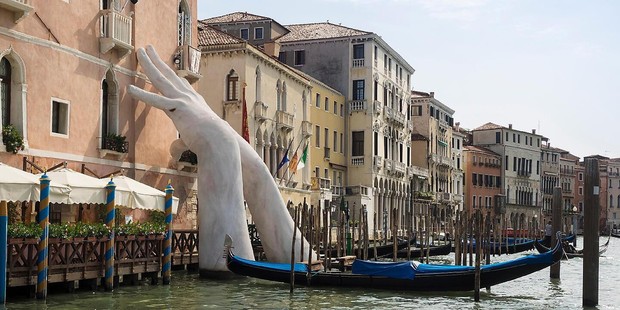
Zimbabwe is strengthening its footprint on the global arts stage through its participation at the 61st Venice Biennale, currently underway in Venice.
This year’s Zimbabwe Pavilion, titled Second Nature: Manyonga, features works by five Zimbabwean artists exploring identity, memory, transformation, spirituality, and humanity’s relationship with the environment. The showcase positions Zimbabwe among 99 nations presenting contemporary artistic narratives at one of the world’s most prestigious cultural platforms.
A major highlight of the Biennale is In Minor Keys, the main exhibition that brings together global artistic conversations and millions of visitors from around the world.
Curated by Fadzai Muchemwa, Zimbabwe’s pavilion presents a powerful narrative of resilience and cultural evolution. Muchemwa said Second Nature represents a journey of growth since Zimbabwe’s debut at the Biennale in 2011 with Seeing Ourselves.
“Second Nature is about adaptation and how life events reconfigure our worldview. In Zimbabwe, we always say if one path is closed, you make another — that’s the essence of this exhibition,” she said.
Inside the pavilion, visitors encounter thought-provoking works by artists such as Pardon Mapondera and Eva Raath. Their artworks reflect themes of spirituality, culture, personal memory, and societal change.
Mapondera said he uses his work to explore spirituality and the inner self:
“People invest so much in their outward appearance, forgetting the man inside,” he noted.
Raath, meanwhile, draws heavily on childhood memories and family influences:
“One piece is a tribute to my father, who was a journalist. Others revisit moments from my early life,” she said.
Visitors praised Zimbabwe’s consistency and artistic excellence at the Biennale.
“I’m impressed by the Zimbabwe Pavilion. I’ve followed it since its earliest editions. Many African countries can learn from Zimbabwe’s consistency,” one visitor said.
Another added: “Zimbabwe has a beautiful gallery. I’ve visited it several times and it’s always exceptional.”
The global exhibition runs until November, and Zimbabwe continues to ensure its artistic voice is firmly part of the international cultural conversation.