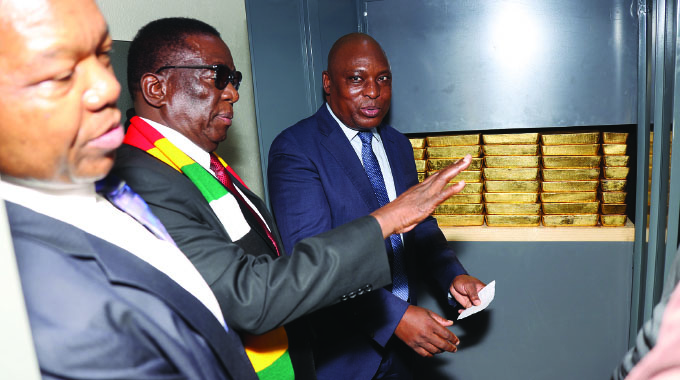
Zimbabwe’s gold reserves have surpassed 4,5 tonnes while foreign currency receipts reached a record US$10,72 billion during the first six months of 2026, reinforcing the stability of the Zimbabwe Gold (ZiG) currency and strengthening the country’s macroeconomic outlook.
The latest figures are contained in the Reserve Bank of Zimbabwe’s (RBZ) Quarterly Snapshot on Recent Monetary, Currency, Price and Financial Developments for the second quarter of 2026, released yesterday.
Foreign currency receipts increased by 47,8 percent from US$7,25 billion recorded during the corresponding period last year, marking the highest inflows ever registered in Zimbabwe. The growth was driven mainly by exports, diaspora remittances and loan proceeds.
The RBZ also reported that foreign currency reserves rose to US$1,6 billion by the end of June, enough to provide 1,6 months of import cover. The reserves are sufficient to cover about six times the stock of ZiG reserve money and one-and-a-half times total ZiG deposits, further strengthening confidence in the local currency.
“The Reserve Bank continued with the accumulation of foreign currency reserves backing the ZiG during the quarter ending June 2026. The build-up of foreign currency reserves is critical for the lasting stability of the ZiG currency,” the central bank said.
The report noted growing public confidence in the ZiG, with around 40 percent of all transactions processed through the national payment system now being conducted in the local currency.
Macroeconomic stability also remained firm during the second quarter, with annual ZiG inflation ending June at 4,72 percent despite higher international oil prices triggered by conflict in the Middle East. Month-on-month inflation averaged just 0,47 percent between January and June.
In response to the improved inflation outlook, the Monetary Policy Committee reduced the Bank Policy Rate from 35 percent to 30 percent in June, describing the move as a recalibration rather than a relaxation of monetary policy.
The ZiG exchange rate remained broadly stable, trading between ZiG25 and ZiG27 against the United States dollar, while the parallel market premium stayed below 20 percent.
RBZ Governor Dr John Mushayavanhu said prudent monetary management would continue to safeguard price stability and economic growth.
“The prudent monetary policy stance, coupled with proactive Government interventions in the fuel sector, has helped the country weather the inflationary impact of the recent oil price shock. The Reserve Bank will continue calibrating policy in line with macroeconomic fundamentals to support inflation and growth objectives,” he said.