
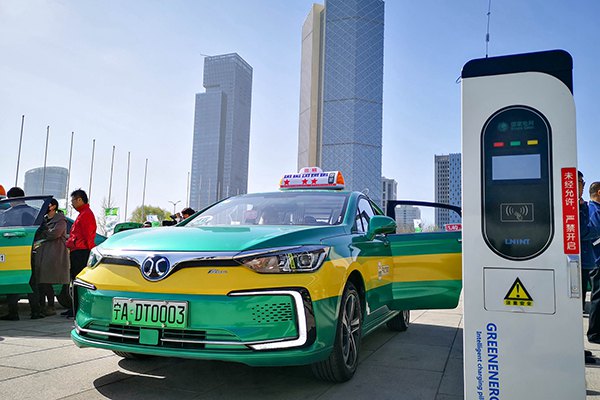
BEIJING, July 15 (Reuters) – China has an increasingly important buffer against oil price shocks: electric taxis.
Across Chinese cities, taxi usage and ridesharing are booming. In May, people took 3.05 billion trips, with government data showing trips have grown 6% since the Iran war began at the end of February, versus March to May last year.
The jump reflects a quirk of China’s transport structure: fares are falling despite gasoline prices rising. Analysts say a flood of new drivers searching for work in a sluggish economy combined with cheap electric cars is depressing fares, in turn attracting passengers who want to save on higher petrol costs.
A part-time Beijing ride-hailing driver surnamed Li said fares have fallen 10% to 15% since he started six months ago. “Competition is intense,” the 36-year-old told Reuters at an electric vehicle charging station.
The flip side can be seen on social media. Since gasoline prices began rising in March, hundreds of posts describe how travel by cab or rideshare is cheaper than driving.
“Especially when gas prices are high, I’d rather take a taxi to places that are too far to bike to. That way, I don’t have to look for parking or pay for gasoline,” said Yang, a 45-year-old owner of a petrol car, who only gave her surname.
With the electrification of taxis, the rideshare boom adds to evidence that transportation in China is becoming less dependent on oil, insulating it against oil shocks such as the closure of the Strait of Hormuz.
About half of China’s 1.3 million-strong taxi fleet is electric, according to the Ministry of Transport, and in major cities it is closer to 100%.
Didi, the main ridesharing app, said it registered another 2 million hybrid or electric cars last year taking its total non-fossil fuel fleet to 8 million cars, with EVs doing 75% of all mileage.
As a result, China burned 10% less gasoline and 14% less diesel in May than a year earlier, even though road freight rose 2%, and road travel during the May Day long weekend hit an all-time high.
Greenpeace forecasts that 90% of taxi and ridesharing mileage will be electric by 2035.
“As fuel prices have gone up, people are driving their own petrol cars less,” said Daizong Liu, East Asia director at the Institute for Transportation & Development Policy in China.
“But overall travel demand is still increasing, so more trips are shifting to public transport, such as taxis and the subway.”