Zimbabwe’s Permanent Representative to the UN, Ambassador Taonga Mushayavanhu, has called for a fair and inclusive global energy transition that prioritises value addition and beneficiation in mineral-producing countries, during a High-Level Meeting on Critical Energy Transition Minerals held in New York.
The high-level meeting was convened as a follow-up to the Secretary-General’s report, which seeks to establish global principles for the responsible, equitable and sustainable management of critical minerals that are essential for the global shift towards renewable energy technologies and low-carbon economies.
Ambassador Mushayavanhu said Zimbabwe fully supports the Guiding Principles and Actionable Recommendations contained in the report, describing them as an important step towards ensuring that mineral-rich developing countries derive meaningful and lasting benefits from their natural resources.
“Zimbabwe was honoured to form part of the Secretary-General’s Panel on Critical Energy Transition Minerals and welcomes the Guiding Principles and Actionable Recommendations contained in the report,” he said.
He stressed that the global energy transition presents a unique opportunity for mineral-producing nations to advance their industrialisation agendas and strengthen their economies through value addition and local beneficiation.
“Our message is simple, our minerals must create value at source. This energy transition must not represent yet another chapter of extraction,” Ambassador Mushayavanhu said.
He warned that the transition to green energy should not replicate historical patterns in which developing countries exported raw materials while value creation, manufacturing and technological advancement took place elsewhere.
“The energy transition must be just and inclusive. Countries that are endowed with critical minerals must benefit through investments in processing, manufacturing, skills development and technology transfer. The era of exporting raw minerals without meaningful domestic value creation must come to an end,” he said.
Ambassador Mushayavanhu said Zimbabwe remains committed to promoting sustainable and responsible mineral development that supports national development objectives while contributing to global climate goals.
“International partnerships must be anchored on mutual benefit, equity and sustainable development to ensure that the global energy transition leaves no country behind and delivers tangible benefits to the communities that provide the minerals powering the world’s green future,” he said.
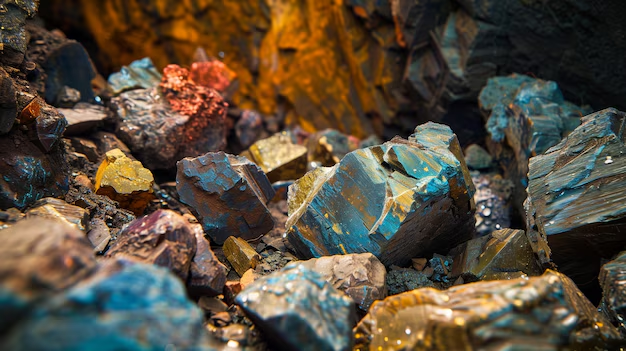
Meanwhile, Zimbabwe is among the countries endowed with critical energy transition minerals, including lithium, nickel, platinum and other strategic resources that are increasingly in demand for the production of electric vehicle batteries, renewable energy storage systems and clean energy technologies.