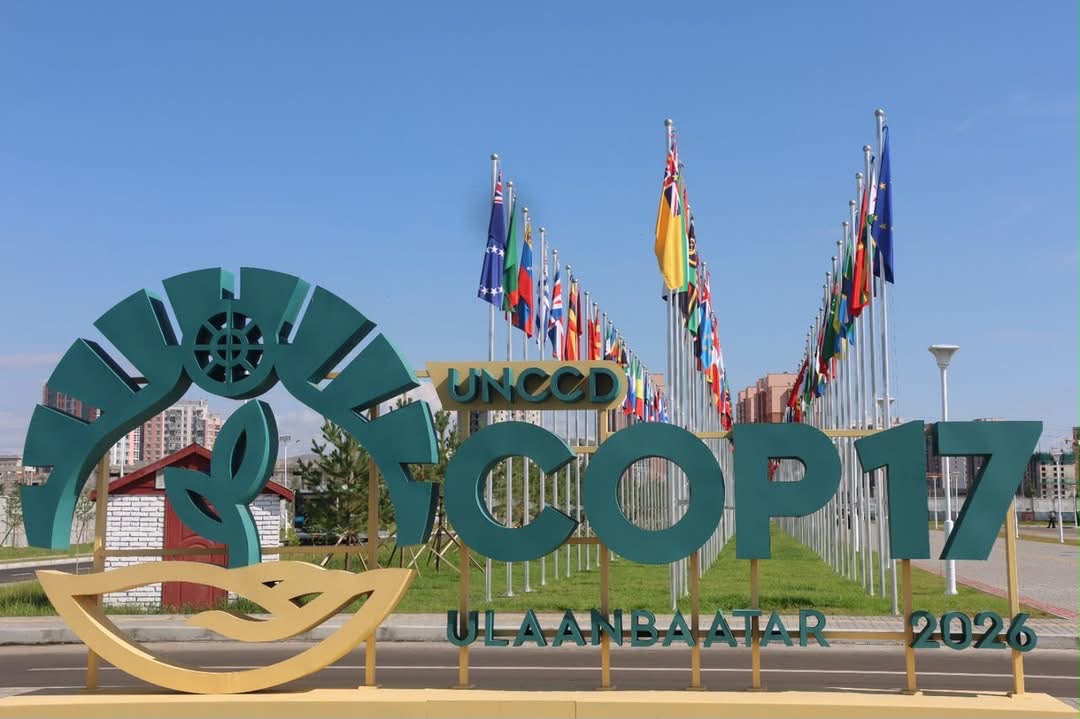
A new financing facility launched at COP17 in Ulaanbaatar, Mongolia, is targeting up to US$400 million in private investment to strengthen drought resilience, improve water infrastructure and support land restoration in vulnerable countries, including Zimbabwe.
The Drought Resilience Investment Facility (DRIF), backed by the United Nations Convention to Combat Desertification (UNCCD) and the Government of Luxembourg, seeks to use public and concessional finance to reduce investment risks and unlock private capital for projects that improve water security and protect communities from the growing effects of drought.
The facility was launched as countries marked Water Day at COP17, where discussions centred on the urgent need to increase investment in measures that enable communities and economies to prepare for drought before disasters strike.
Environment, Climate and Wildlife Minister, Dr Evelyn Ndlovu, said the plan would identify investment-ready projects while aligning them with the country’s climate commitments.
“In partnership with the UNCCD, Zimbabwe is developing a National Drought Investment Plan. It will create a pipeline of investment-ready projects covering watershed management, ecosystem restoration and resilient water infrastructure,” she said.
Dr Ndlovu said Zimbabwe was working to establish an enabling policy environment and engage development partners, including DRIF, the Global Environment Facility and private investors.
“We call on our partners to support Zimbabwe in accessing financing mechanisms such as DRIF. We cannot adapt without capital, and we cannot deliver without partnerships,” she said.
UNCCD Executive Secretary and former Egyptian Minister of Environment, Dr Yasmine Fouad, said innovative financing was essential in addressing the growing vulnerability caused by drought and land degradation.
“We are testing innovative financial mechanisms and looking at how they can be implemented at national level. DRIF is one of the instruments that can help bring private sector finance into drought resilience,” she said.
Dr Fouad said drought and land degradation were increasingly threatening livelihoods, employment and security, particularly among vulnerable communities.
“When drought strikes or land becomes degraded, people become more vulnerable. They lose jobs and livelihoods become less sustainable, which can increase conflict and threaten their safety and security,” she said.
Ireland’s Minister of State at the Department of Agriculture, Food and the Marine and at the Department of Climate, Energy and the Environment, Timmy Dooley, said countries needed to move away from treating drought solely as an emergency.
“We need to address drought not just as a crisis when it happens, but by preparing in advance,” he said, calling for investment in water infrastructure and systems capable of preventing further land degradation.
The European Investment Bank also stressed that strong institutions and predictable policy frameworks were critical to attracting private capital into large-scale water and agricultural projects.
EIB Vice-President, Gelsomina Vigliotti, said investors needed assurance that their capital would be protected while generating sustainable returns.
“Large infrastructure investments that require public finance also need strong institutional reform,” she said.
The financing challenge remains significant. UNCCD estimates that about US$355 billion annually is required between 2025 and 2030 to meet global land restoration and drought-resilience targets.
However, only about US$77 billion is currently being mobilised each year, creating an estimated annual financing gap of US$278 billion.
For Zimbabwe, which continues to face increasingly frequent and severe droughts, access to innovative financing could help accelerate investment in water security, ecosystem restoration and climate-resilient infrastructure.