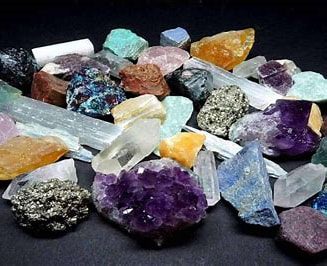
Government will no longer approve mining projects focused on extracting a single mineral, with all future investments expected to incorporate capacity to identify, separate and process multiple minerals contained within ore deposits.
Vice President, Dr Constantino Chiwenga, announced the new approach while addressing the Zimbabwe-China Business Forum in China, where he called for greater investment in mineral beneficiation and the development of industries along the entire value chain.
Dr Chiwenga said Zimbabwe was moving away from isolated mining operations towards integrated projects capable of maximising value from mineral deposits.
“We are no longer permitting isolated, single mining operations,” he said.
“We, therefore, encourage investors to bring in machinery capable of identifying and separating all embedded minerals.”
The Vice President said the policy was aimed at ensuring Zimbabwe derives greater economic value from its mineral resources instead of exporting ores without adequate processing.
He said Zimbabwe ranked second globally in terms of geographically concentrated strategic minerals and possessed key resources required for emerging industries, particularly the electric vehicle battery value chain.
These include lithium, nickel, graphite, manganese and cobalt, while the country also has deposits of copper, chrome, platinum group metals and rare earth minerals used in advanced technologies, including artificial intelligence hardware.
Dr Chiwenga said investors would therefore be expected to consider the broader mineral composition of deposits and develop technologies capable of recovering different minerals from the same ore body.
The new approach will also be supported by Special Economic Zones (SEZs) and industrial parks designed to facilitate mineral processing, manufacturing and the development of upstream and downstream industries.
“Within this premise, we invite investment in Special Economic Zones and industrial parks anchored on integrated manufacturing,” he said.
“We call for the establishment of upstream and downstream value-chain industries across sectors in these Special Economic Zones.”
The Government seeks to further extend the value-addition strategy to agriculture, with Dr Chiwenga identifying agro-processing as another area with significant investment potential.
He singled out tobacco, noting that Zimbabwe is Africa’s largest tobacco producer but continues to export most of its crop as raw leaf.
“Zimbabwe is Africa’s largest tobacco producer, yet exports 90% as raw leaf.
“We therefore invite investments in tobacco value addition at source, moving through the value chain from cutting, blending, manufacturing and packaging,” he said.
On the sidelines of the business forum, Dr Chiwenga held bilateral discussions with Sany Group vice president, Roger Guo, who said the company regarded Zimbabwe as a potentially lucrative market and a gateway to the wider African market.
He proceeded to meet with the China Railway 25th Bureau Group Co general manager, Cheng ZhiQing, whose company is also a subsidiary of China Railway Construction Corporation, specialising in railway, highway, bridge and tunnel construction, as well as municipal and housing projects.
Dr Chiwenga later toured the Hangzhou City Brain Operation Command Centre, an artificial intelligence-powered urban management platform that uses big data to monitor city operations in real time.
He was further exposed to developments in e-commerce, cloud computing and other digital technologies when he visited the Headquarters of Alibaba.
The engagements form part of Zimbabwe’s efforts to deepen economic cooperation with China while attracting investment into mining, manufacturing, infrastructure, agriculture and technology.