……When yesterday’s experiences continue to shape today’s lives
For some people, childhood is remembered through laughter, family gatherings and carefree days. For others, it is a chapter they would rather leave unopened.
Yet childhood does not always stay in the past.
Behind the confidence of many adults may be memories of bullying, parental loss, emotional neglect, harsh parenting, family conflict or growing up in an unstable home. These experiences may be invisible to everyone else, but they can continue to influence how people see themselves, respond to stress and relate to others long after childhood has ended.
This is why we need to take childhood experiences seriously—not simply as memories, but as experiences that can shape the adults children eventually become.
When yesterday’s stress becomes today’s struggle
Health Psychology offers an important way of understanding this connection. George Engel’s Biopsychosocial Model reminds us that health is influenced by the interaction of biological, psychological and social factors. In other words, wellbeing is not determined by the body alone. Our thoughts, emotions, relationships and environments matter too.
Consider an adult who spent much of childhood living in an unpredictable or stressful environment. They may have learned to remain constantly alert, to avoid conflict or to suppress their emotions. Years later, these responses may still affect how they deal with relationships, work, stress or difficult situations.
But it is important not to turn childhood adversity into a life sentence. Not every person who experiences hardship will develop psychological difficulties. People differ in their personalities, coping abilities, relationships and access to support. Some emerge from difficult childhoods with remarkable resilience.
The point is not that childhood determines adulthood. Rather, childhood can leave patterns that deserve to be understood.
We learn more than we are taught
Children are not only taught through instructions. They are also taught through observation.
Albert Bandura’s Social Learning Theory helps explain why the behaviour children see around them can influence the behavior they later adopt. A child who repeatedly witnesses adults responding to disagreements through aggression may come to see aggression as a normal way of handling conflict. A child who grows up witnessing adults communicate calmly, apologise and solve problems may learn a very different approach.
This raises an uncomfortable question for adults: What are children learning from us when we think they are not watching?
The answer may be more important than any lesson we deliberately teach.
The way parents handle anger, the way adults speak to one another and the way families respond to mistakes can all become lessons. Children may not have the words to explain what they are learning, but they are often absorbing it.
The wounds nobody sees
Physical injuries are usually easier to recognise. Emotional wounds are not.
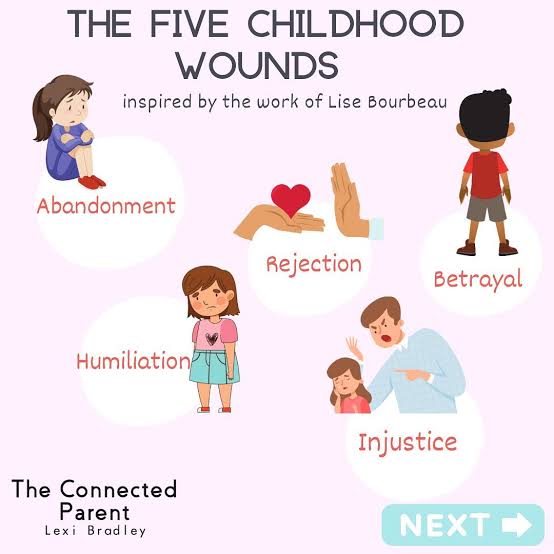
An adult may appear successful, confident and emotionally strong while privately struggling with low self-esteem, fear of rejection, difficulty trusting others or a constant need for approval. Someone who was repeatedly criticised as a child may grow into an adult who is never satisfied with their achievements. Someone who experienced emotional neglect may struggle to express their feelings or ask others for help.
These patterns are not always obvious—even to the person experiencing them.
Sometimes what looks like “overreacting”, “being too sensitive” or “being distant” may have a deeper history. Understanding that history does not excuse harmful behavior, but it can help explain where certain patterns come from and, more importantly, how they can be changed.
Why asking for help can feel so difficult?
For some people, the greatest challenge is not recognising that they are struggling. It is accepting that they deserve help.
If a child grows up in an environment where emotions are dismissed, vulnerability is mocked or talking about personal problems is discouraged, they may learn to keep everything inside. By adulthood, seeking counselling may feel unnecessary, embarrassing or even shameful.
The Health Belief Model helps explain how beliefs about health, the seriousness of a problem, the benefits of seeking help and perceived barriers can influence health-related decisions.
This matters because mental-health support is only useful when people feel able to seek it.
We therefore need to challenge the idea that asking for psychological help is a sign of weakness. Sometimes, asking for help is one of the clearest signs that a person is willing to confront what has hurt them rather than allow it to control their future.
Healing does not mean forgetting
There is a common misconception that healing means forgetting the past.
It does not.
Healing can mean understanding what happened, recognising how it affected you and learning healthier ways of responding. Counselling, supportive relationships, self-awareness and healthy coping strategies can help people process difficult experiences and develop new patterns.
The past may explain some of our behavior, but it does not have to dictate all of it.
This is an important message for anyone who believes they are permanently damaged by what happened during childhood. Difficult experiences can leave lasting effects, but people are capable of growth, change and resilience.
We all have a role to play
If childhood experiences can influence adult wellbeing, then protecting children cannot be left to parents alone.
Schools, families, communities, churches, healthcare professionals and other institutions all have a role to play in creating environments where children feel safe, valued and heard.
Children need more than food, clothing and education. They need affection. They need encouragement. They need boundaries that protect rather than humiliate them. Most importantly, they need adults who are willing to listen.
We should also be careful about romanticising difficult childhoods by saying that hardships “make people stronger.” Sometimes hardship simply hurts. Children should not have to suffer in order to become resilient adults.
The better goal is to create environments in which children can develop resilience without first having to experience unnecessary pain.
The adults we become begin with the children we raise
Childhood wounds may not always be visible, but their effects can reach far into adulthood. Health Psychology reminds us that our wellbeing is shaped by an interaction between our bodies, our thoughts, our behaviours and our social environments.
That understanding should change the way we think about childhood.
A difficult childhood does not have to produce a difficult adulthood. But neither should we assume that painful experiences simply disappear with age.
Perhaps the real question is not only, What happened to us when we were children? It is also: What are we doing with what happened to us now?
And for those raising, teaching or caring for children, there is an even more important question:
What kind of childhood are we creating for the adults they will one day become?
The childhood we create today can influence the adults we meet tomorrow.