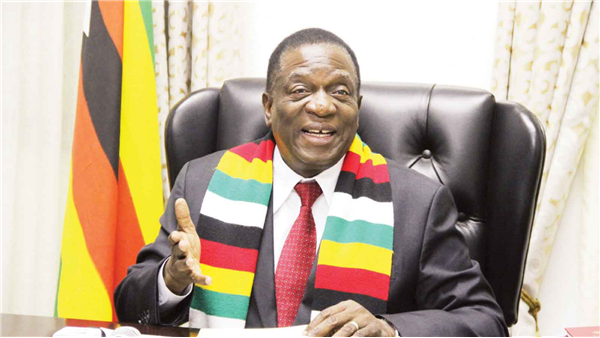
Incoming Chairman of the Common Market for Eastern and Southern Africa (COMESA), President Emmerson Mnangagwa, has challenged businesses across the COMESA to strengthen strategic partnerships, dismantle barriers to regional trade and invest in value addition to accelerate economic growth, create jobs and improve living standards across the region.
Officially opening the 19th COMESA Business Forum and Exhibition in Harare, on Tuesday, President Mnangagwa said the private sector should take the lead in forging partnerships, expanding investment and developing regional value chains to build an integrated and competitive common market.
“Intra-COMESA trade and investment remain significantly low. This gap presents both a challenge, as well as an opportunity,” he said.
“I challenge the Business Forum to hold frank and bold dialogue that will help scale up regional trade and investment, identify practical solutions and forge partnerships that allow businesses to produce, invest, trade and create jobs across our common market,” President Mnangagwa said.
President Mnangagwa said intra-COMESA trade and investment remained significantly low, presenting an opportunity for member states to address structural constraints and expand commercial cooperation.
He urged stakeholders to prioritise the removal of non-tariff barriers, streamline customs procedures and address challenges associated with rules of origin and other costs of doing business that undermine the movement of goods, services and capital across borders.
The President said Governments and the private sector had a shared responsibility to ensure that regional integration translated into tangible economic benefits, adding that investments should complement one another rather than remain confined to individual national economies.
“Importantly, investment in our respective productions should not be developed as isolated national projects. They must connect our economies through mutually beneficial cross-investments and regional value chains,” he said.
He said stronger commercial linkages would connect producers with buyers, investors with viable projects, manufacturers with regional suppliers and micro, small and medium-sized enterprises with distributors and wider markets.
President Mnangagwa also called for increased investment in agriculture, critical minerals, energy, industrialisation and human capital development to strengthen production capacity and build competitive industries across the bloc.
He said member states should harness their natural resources and youthful populations to develop integrated value chains capable of generating employment, improving skills and expanding economic opportunities.
The President further challenged businesses to move away from exporting raw commodities towards value addition, beneficiation and manufacturing to retain more economic value within the region.
“Private sectors are urged to move decisively from the export of commodities towards value addition, beneficiation and manufacturing,” he said.
Citing Zimbabwe’s policy on unprocessed lithium ore exports, introduced in December 2022, President Mnangagwa said the country was pursuing industrialisation by encouraging processing and value retention at source.
He identified agro-processing, leather production, cotton-to-clothing manufacturing, pharmaceuticals, battery materials and clean energy technologies as other areas with potential to deepen industrial development and regional trade.
“I invite investors, manufacturers, finance institutions, partners and captains of industries within COMESA to join us on this exciting journey as we work to transform the numerous gaps within our region into productive enterprises, jobs, empowerment chances and skills especially for the youth,” he said.
Zimbabwe is expected to assume the COMESA chairmanship for the 2026–2027 term at the 25th Heads of State and Government Summit, taking over from Kenya.
The summit and associated business engagements are expected to advance regional economic integration, with the President emphasising that stronger partnerships, increased production and value addition should ultimately translate into shared prosperity across member states.