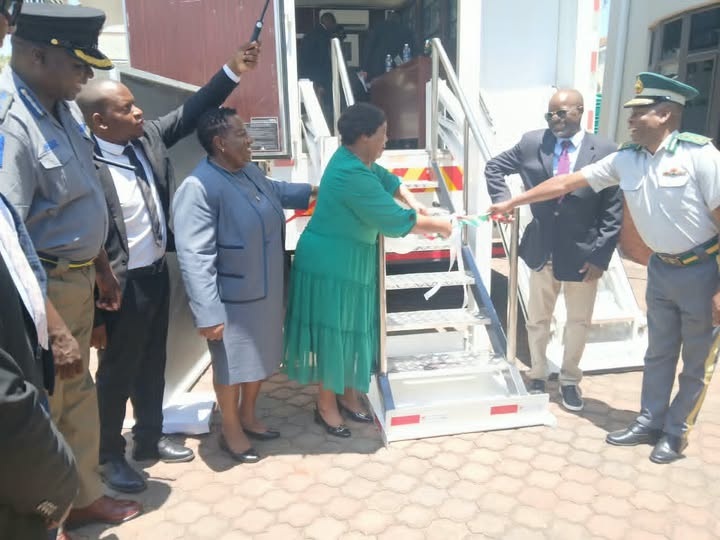
Zimbabwe has commissioned its first mobile court, in a development expected to ease congestion in conventional courts, reduce the cost of accessing justice and bring judicial services closer to communities.
The facility, commissioned by Chief Justice Elizabeth Gwaunza in Harare, yesterday, will initially serve Glen Norah, Glen View, Budiriro and Southlea Park, helping to ease the growing caseload at Mbare Magistrates’ Court.
The mobile court will operate on a rotational basis, visiting police stations in the four suburbs once a week.
Speaking at the commissioning ceremony, Chief Justice Gwaunza said the initiative was aimed at addressing barriers that prevent some people from accessing justice, particularly transport costs, long distances and time spent travelling to court.
“For many people, access to a court still involves travelling considerable distances, paying transport costs and taking time away from work, family responsibilities or the pursuit of a livelihood,” she said.
“These burdens can be particularly difficult for people with limited means, older persons and persons with disabilities. For some, attending court requires arrangements they can scarcely afford.”
Chief Justice Gwaunza said bringing judicial services directly into communities would give effect to the constitutional right to access justice while promoting the timely resolution of cases.
“A court that people cannot reach cannot fully serve them. The mobile court takes the court to the people, rather than requiring the people always to come to the court,” she said.
The initiative is also expected to improve the efficiency of the justice delivery system by reducing missed court appearances, postponements and expenses associated with transporting accused persons and court documents.
Chief Justice Gwaunza said locating court proceedings closer to communities would also improve witness attendance, helping to minimise delays arising from their failure to appear.
The arrangement is expected to ease pressure on Mbare Magistrates’ Court, allowing it to focus on its remaining caseload while promoting more efficient utilisation of public resources.
The programme is part of the Judicial Service Commission’s 2026–2030 Strategic Plan, which seeks to establish mobile courts in every province by 2030.