MBIRE – Communities in Mbire District, Mashonaland Central Province, are set to benefit from improved access to water following the construction of an 18-kilometre piped water scheme aimed at strengthening livestock protection and building resilience against anticipated El Niño-induced drought conditions.
The initiative, being implemented by Welthungerhilfe (WHH) under its Welthungerhilfe Anticipatory Humanitarian Action Facility (WAHAFA) programme, is expected to supply water to two dip tanks, schools, a local clinic and surrounding communities.
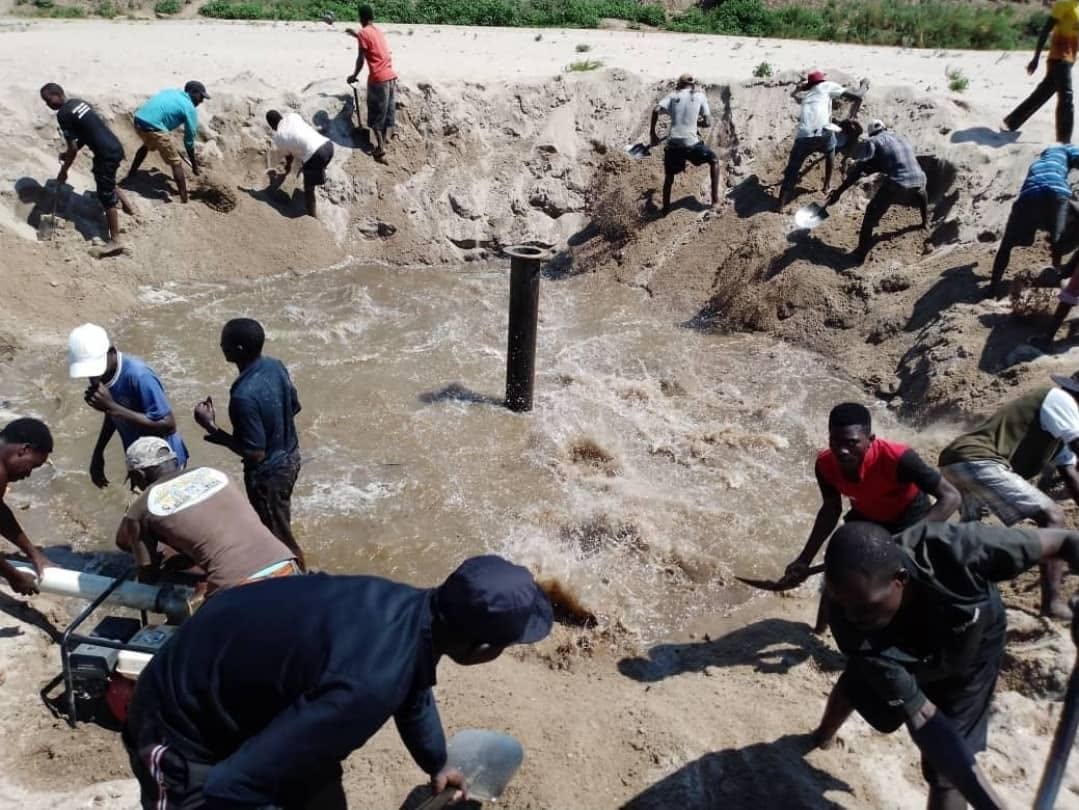
The project uses sand abstraction technology, which involves extracting water retained in river sand, offering a sustainable alternative in parts of the district where conventional groundwater sources have become increasingly unreliable.
WHH field officer responsible for anticipatory action, Mr John Tapedza, said the intervention was designed to address both human and livestock water needs while helping communities prepare for prolonged dry conditions.
“What we are doing here in Mbire is an initiative towards an anticipated El Niño which was predicted. We are coming here with two main components, which are livestock support and water provision. However, the water provision will also cater for livestock and human beings,” he said.
Tapedza said the organisation had opted for sand abstraction after observing that boreholes in some areas were increasingly failing to provide reliable water supplies.
“The reason we have decided to go with a sand abstraction scheme is the fact that there is little water underground. Usually, more boreholes are dug and they become dry. So we have decided to go for the sand abstraction process,” he said.
The 18-kilometre pipeline is expected to benefit Musengezi Primary School, a secondary school, a local clinic, two dip tanks and nearby communities, improving access to water for essential social services and livestock production.
For livestock farmers, the development is expected to ease persistent water shortages that have disrupted cattle dipping programmes, exposing animals to tick-borne diseases.
At Musengezi Mission Dip Tank Number 10 in Ward 5, farmers have struggled to secure sufficient water for routine dipping exercises.
The facility requires approximately 30 000 litres of water per dipping session, yet its reserve tank has a capacity of only 10 000 litres, leaving farmers with a significant water deficit.
Dip tank chairman Tafadzwa Mateka said the shortages had forced farmers to source water from distant locations, making regular dipping difficult.
“One of the major challenges we faced at Musengezi Mission Dip Tank was inadequate water. The water was not readily available at the levels required for dipping cattle, and we had to source it from far away,” he said.
He said the new water scheme had raised hopes among farmers of maintaining consistent dipping schedules and protecting their livestock throughout the year.
Ward 5 Veterinary Officer Martin Edwin Mushipe said dipping was a critical component of cattle disease prevention, particularly in areas vulnerable to tick-borne diseases.
“Dipping is our number one disease-control measure against killer tick-borne diseases. It accounts for about 80 percent of our cattle disease-control efforts,” he said.
Apart from improving water access, WHH is also supporting livestock farmers to prepare for feed shortages through the production of urea-treated stover, a supplementary feed made from crop residues to improve their nutritional value.
Tapedza said the programme was targeting the production of approximately 90 tonnes of urea-treated stover across Mbire District.
Farmers are receiving training and assistance with the necessary ingredients to prepare the supplementary feed, which is expected to help sustain livestock during periods of pasture scarcity.
The combined interventions are part of WHH’s anticipatory humanitarian action approach, which seeks to reduce the impact of climate-related shocks by strengthening community preparedness before drought conditions worsen.
For Mbire, where unreliable water supplies and recurring dry spells threaten livestock production and rural livelihoods, the 18-kilometre scheme represents an important investment in protecting cattle, supporting farmers and improving access to essential community services.