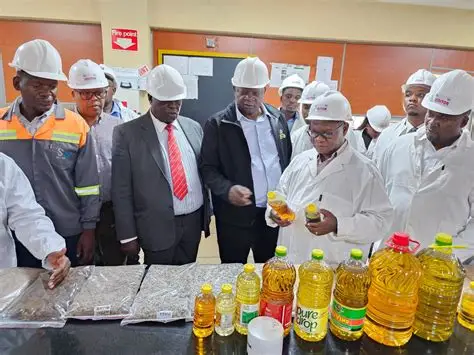
Zimbabwe’s medicinal cannabis sector is transitioning from primary production to high-value pharmaceutical manufacturing, with a new facility in Headlands marking a significant shift in the country’s industrial trajectory.
The plant, operated by Ivory Medical, is now producing Active Pharmaceutical Ingredients (APIs), enabling local processing of cannabis into pharmaceutical-grade inputs and reducing reliance on exporting raw materials for refinement abroad.
Ivory Medical Quality Control Manager, Fortune Chagonda, said the facility is designed to meet strict international standards while anchoring a domestic supply chain.
“By focusing on quality-controlled extraction and refinement, we are ensuring pharmaceutical-grade standards while creating a reliable local supply chain. This marks a shift from simply growing cannabis to actually producing high-value pharmaceutical inputs within Zimbabwe,” he said.
Chagonda said value addition was central to the company’s strategy.
“The real value in this sector lies in processing and refinement. Cultivation is only the starting point, but the end goal is to produce APIs that meet global pharmaceutical requirements,” he said.
The development comes despite high barriers to entry in the sector, including a US$60 000 licensing fee, which has limited participation by smaller local investors.
Chagonda also noted that infrastructure remains the defining factor in the industry.
“Licensing is one aspect, but the major investment is in the specialised infrastructure required for extraction, refinement and quality assurance. That is where the industry becomes capital-intensive and where long-term competitiveness is built,” he said.
The Headlands facility is also seen as aligning with Government’s industrialisation thrust under Heritage-Based Education 5.0 and the National Development Strategy frameworks, which emphasises value addition and beneficiation.
Chagonda said the model being adopted supports broader participation in the sector.
“We are working with biomass from various licensed farmers, which creates a structured supply chain while ensuring compliance with strict pharmaceutical standards,” he said.
“This approach allows smaller growers to participate, as long as they meet the required quality benchmarks.”
By producing APIs locally, Zimbabwe is expected to reduce its pharmaceutical import bill, saving foreign currency while building technical capacity in specialised fields such as chemistry, engineering and quality assurance.
“Local production of APIs will reduce dependency on imports and help retain both knowledge and value within the country,” Chagonda said.
Zimbabwe legalised medicinal cannabis in 2018 through Statutory Instrument 62, but it has taken years for the sector to evolve from policy to industrial-scale production.
“What we are seeing now is the transition from policy to implementation — from legislation to actual manufacturing on the ground,” he said.
Experts say the success of such facilities could influence future regulatory reforms, including the possible introduction of more accessible licensing tiers to broaden participation in the industry.