
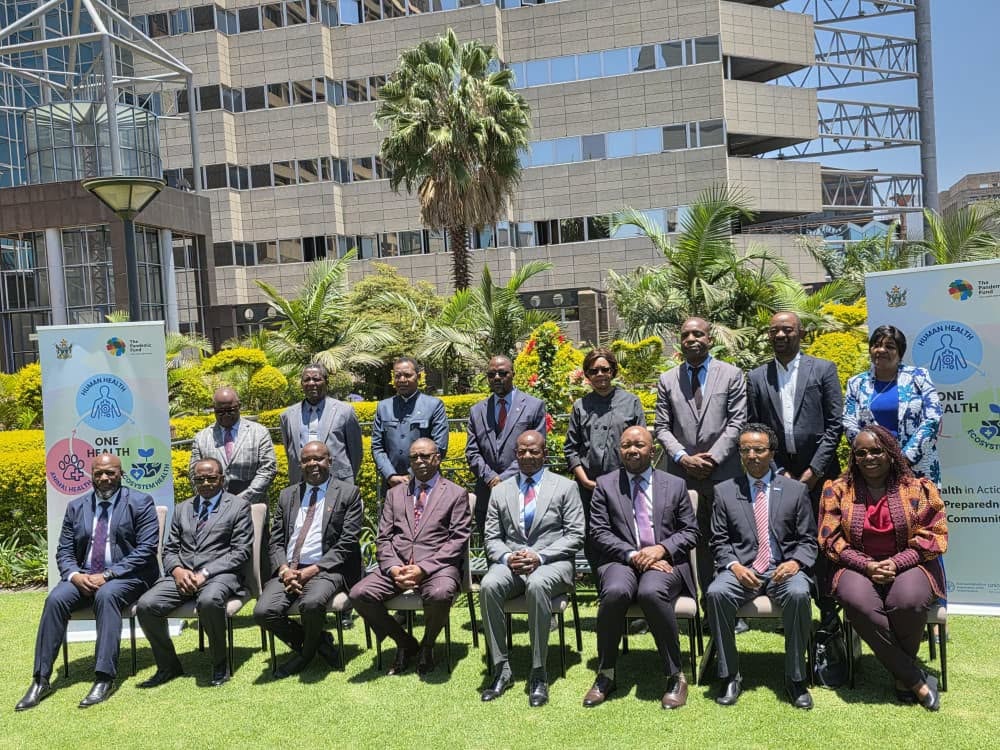
Zimbabwe has launched two Pandemic Fund projects worth a combined US$16.82 million to strengthen disease surveillance, laboratory capacity and emergency response systems as the country steps up preparedness for future public health threats.
The projects, comprising a regional grant involving eight Southern African countries and a national programme titled From Early Warning to Early Action, seek to improve the early detection and management of disease outbreaks through a One Health approach that integrates human, animal and environmental health.
Speaking at the launch, the Minister of Health and Child Care, Dr Douglas Mombeshora said protecting public health was fundamental to national development, particularly as the country pursues Vision 2030.
“Disease outbreaks can disrupt livelihoods, trade, agriculture, education and essential public services. Preparedness is therefore not simply a health sector priority; it is a national development imperative,” said Dr Mombeshora.
The regional grant is valued at approximately US$35.8 million, with Zimbabwe receiving about US$2.49 million, while the national programme has been allocated US$14.33 million and will run until 2029.
The two investments are expected to strengthen disease surveillance, laboratory systems and emergency response structures, while improving the use of climate information to anticipate health risks.
Development partners have also pledged approximately US$49 million in co-financing, while Government has committed about US$91.8 million in domestic resources towards broader health security efforts.
The minister said the investments would require strong coordination across Government departments, development partners, research institutions, the private sector and communities to ensure that the country builds a sustainable and responsive public health system.
“The One Health approach provides the framework for this. Diseases do not respect administrative boundaries, and our preparedness systems must be equally responsive across sectors and across national borders,” the minister said.
The projects will enhance coordination between human, animal and environmental health services at national, provincial, district and community levels, including at the country’s points of entry.
Zimbabwe’s experience with cholera outbreaks and the re-emergence of measles has highlighted the importance of detecting disease threats early and responding promptly to prevent them from escalating into wider public health emergencies.
Dr Mombeshora also said emerging threats, including Ebola, reinforced the need for vigilance, although Zimbabwe had no confirmed cases of the disease.
Government has approved an Ebola Preparedness Contingency Fund and strengthened surveillance measures as part of efforts to ensure the country remains prepared for potential health emergencies.
“Preparedness is not about creating alarm. It is about ensuring that when a threat emerges, our institutions are ready to respond before it escalates into a wider emergency,” the minister said.
He added that the success of the projects would be measured by their impact on disease detection, response times, frontline health worker protection and the ability to minimise disruptions caused by public health emergencies.
“Our guiding principle must be simple: detect early, notify promptly and respond decisively,” the minister said.
The minister emphasised that effective implementation would depend on clear institutional responsibilities, timely information-sharing, transparent procurement and accountability for resources committed to the programmes.
The Ministry of Health and Child Care will coordinate the initiatives, working with implementing partners, including the World Health Organisation, the Food and Agriculture Organisation, UNICEF and the African Development Bank.
The minister urged participating institutions to ensure that the investments translated into tangible improvements in public health protection, while encouraging academic and research institutions to generate evidence to guide policy and practice.
Furthermore, the private sector, civil society and the media are urged to contribute to strengthening health security through innovation, community engagement and the dissemination of accurate public health information.
This is expected to help Zimbabwe move away from fragmented interventions towards a coordinated and resilient health security system capable of responding to emerging threats. The initiative is also in line with the country’s pursuit of Vision 2030, reinforcing health systems needed to protect lives, sustain livelihoods and safeguard economic and social development.