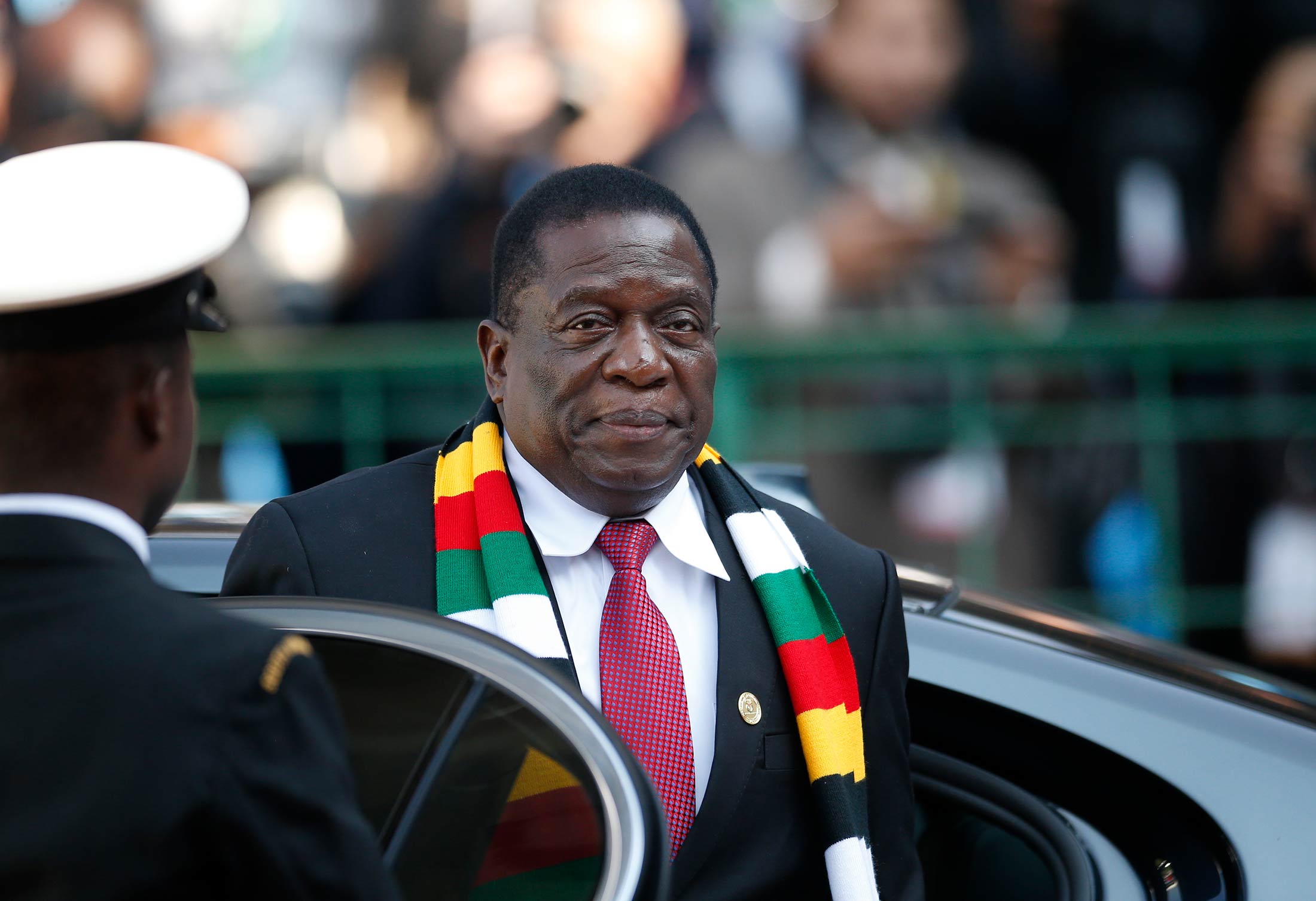
President Emmerson Mnangagwa says Zimbabwe’s land reform programme was a corrective measure meant to reverse colonial dispossession, insisting the issue was about national ownership rather than race.
Speaking in an interview with American broadcaster Tucker Carlson on the sidelines of the World Governments Summit in Dubai, President Mnangagwa said land redistribution was grounded in historical justice and national sovereignty.
“Land did not belong to a race. It belonged to Zimbabweans. When the colonialists took land from us, time came when we asserted ourselves and took back our land,” he said.
He said those who wished to remain in Zimbabwe on equal terms with indigenous citizens were integrated into the new system.
“Those who wanted to have land on the same basis as the African people of Zimbabwe remained. But those who felt they were superior left,” he said.
President Mnangagwa said reclaiming land led to decades of economic sanctions, but Zimbabwe had continued to advance despite the constraints.
“Zimbabwe has been under sanctions for decades as a result of us claiming our land from the British and making ourselves independent. But in spite of all that constraint we have developed, we feel very independent,” he said.
Turning to foreign policy, he dismissed attempts to frame Zimbabwe’s cooperation with China as a rivalry with Western nations, saying the country’s decisions were driven by national interests.
“Zimbabwe is a sovereign state and what is primarily important is what we ourselves, as Zimbabweans, are satisfied with. We do not need to please the West or please the East. We please ourselves.”
He said Zimbabwe’s development partners had diversified over the years.
“Initially we had most of our development thrust from the West. But as we evolved, we have also benefited from investment and cooperation from countries like China.”
He added that diplomatic relations must be understood through unique historical contexts.
“Relations cannot be measured country by country. They depend on the historical background between nations.”
Questioned on the political developments in Venezuela, President Mnangagwa avoided definitive remarks, opting to remain neutral.
“Venezuela is very far away and we do not know whether what we read in Zimbabwe actually happens there, but we are also interested to know why it is happening.”
Zimbabwe is using the World Governments Summit to project its policy positions and strengthen international partnerships as the Second Republic continues to advance its re-engagement agenda anchored on sovereignty, equality and mutual respect.