

Zimbabwe’s industrial momentum is accelerating, supported by rising production, fresh investment and strengthening GDP performance, despite continued criticism from some business groups.
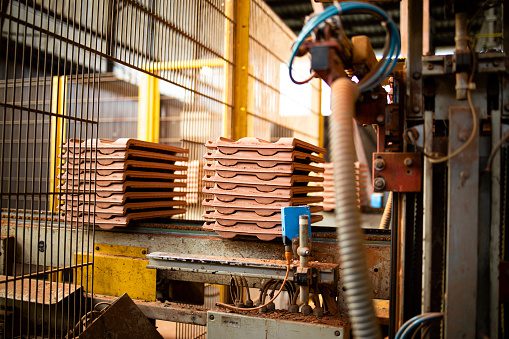
Official data and market trends point to a manufacturing sector that is expanding faster than many observers acknowledge, reshaping the country’s economic landscape and reclaiming its traditional role as a key driver of growth.
Industry and Commerce Minister Mangaliso Ndlovu has dismissed claims that industry is stagnant, insisting that such views are divorced from the reality unfolding across the country. He noted that more than 80 percent of goods on supermarket shelves are now locally produced, a clear indication that domestic production has surged and that value chains are deepening.
“This shows that our industries are producing, and they are producing at a level that was unthinkable a few years ago,” Minister Ndlovu said.
Recent statistics reinforce his argument. The 2025 Mid Term Budget Review shows that manufacturing now contributes 15.3 percent of GDP, overtaking both mining and agriculture for the first time in years.
The Volume of Manufacturing Index has grown sharply, rising from 46.6 percent in 2019 to more than 140 percent in 2024. Capacity utilisation continues to improve, reaching 57.3 percent in 2025, up from just over fifty percent the previous year.
These figures confirm sustained output growth across sectors that were once crippled by currency volatility and power shortages.
But Minister Ndlovu stresses that the country is not only expanding industrial capacity; it is utilising that capacity at levels that signal genuine recovery. “Not only have we witnessed expansion of capacity, we have also seen phenomenal growth in the utilisation of this growing capacity,” he said.
He added that the evidence of industrial resurgence is undeniable for anyone who takes the time to visit factories and new plants across Zimbabwe.
Several new industries have emerged, marking a turning point in the country’s manufacturing profile.
Zimbabwe now boasts the largest gas cylinder manufacturing facility in Sub Saharan Africa, a major milestone that positions the country as a regional supplier. The production of mining explosives has also expanded significantly.
These developments, the Minister said, have been made possible by strong Government support and the stability brought under President Emmerson Mnangagwa’s administration. In 2026, Zimbabwe will commission a high tech vehicle manufacturing plant in Mt Hampden, one of the most advanced facilities ever built in the country.
These investments are set to push exports higher in 2026 and beyond, since many of the new products are designed not only for the domestic market but for the regional export market. This includes gas cylinders, industrial chemicals, processed foods and mining related equipment.
The food processing and grain milling industry has also undergone remarkable transformation. There has been significant investment in modern storage infrastructure, including state of the art silos.
Government has spearheaded the construction of these facilities, while private companies such as Blue Ribbon and National Foods have followed suit. In 2025 alone, the private sector invested not less than US$100 million dollars in agro processing plants, strengthening Zimbabwe’s capacity to process and store grain at commercial scale.
Renewed investment continues to spread across steel, cement, packaging, pharmaceuticals, automotive components and agro processing.
The manufacturing sector attracted more than US$1.4 billion in new investments in 2025, a figure that signals rising confidence in the country’s stabilising economic environment.
Zimbabwe’s broader economy reflects this momentum. GDP is projected to grow by 6.6 percent in 2025, driven by manufacturing, agriculture and expanding value chains. Even in 2024, when global economic conditions were difficult, Zimbabwe recorded growth of 2.9 percent, supported by rising local production and increased sourcing by retailers.
For Minister Ndlovu, the facts are clear and speak for themselves. “Anyone who claims Zimbabwe’s industries are not rising is not paying attention to the facts. The numbers speak for themselves,” he said.
He added that critics need to move beyond outdated narratives and recognise the progress happening across multiple sectors. “Anyone that says Zimbabwe is not growing needs to take a visit around the country to witness the phenomenal growth that is taking place.”
The Minister said Government has already provided the enabling environment required for the private sector to expand. “We have created the environment and stabilised the conditions necessary for growth. At this point, there is no excuse. Industry must step up and drive the growth we all want to see,” he said.
As factories expand, new industries emerge, exports increase and shops fill with local products, Zimbabwe’s industrial revival is not a matter of debate. It is a measurable and visible transformation that continues to gather speed.

Well done Honourable for turning around the fortunes of the industrial sector
As a tuckshop owner, I can attest to what the Minister of Industry is saying. My shop is full of local products, implying an increase in capacity for local industries
Minister chitibisiraiwo maforeigner kumatuckshop uko tiwanewo mikana yokubudirira