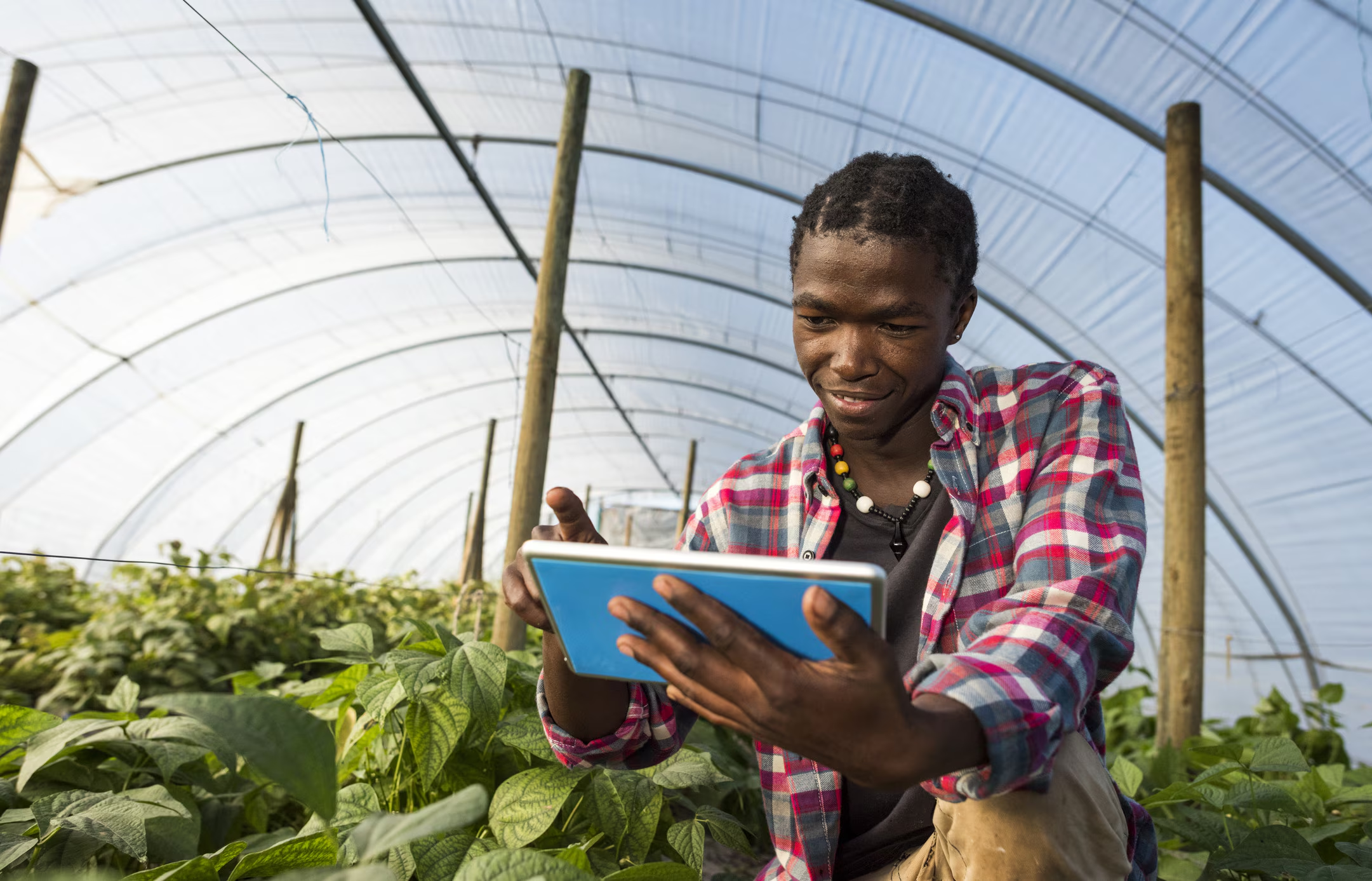
At least 175 households in Chivi and Mwenezi districts have benefited from free climate-smart agricultural inputs under a partnership between the Ministry of Lands, Agriculture, Fisheries, Water and Rural Development (MoLAFWRD) and CARE Zimbabwe, aimed at strengthening resilience in drought-prone communities.
Beneficiaries received sorghum, pearl millet and cowpea seed, along with hydrogels and agricultural extension support, enabling them to adopt climate-resilient farming systems suited to semi-arid conditions.
Mwenezi District Information Officer, Rodney Kudzanai said the programme has increased the uptake of climate-smart agriculture, helping farmers cope with erratic rainfall while improving household food security.
“Chivi and Mwenezi are highly vulnerable to climate change impacts. This partnership is strengthening farmers’ capacity to adapt while improving food security at household level,” he said.
Kudzanai added that the initiative complements Government programmes promoting small grains production as a climate-resilient strategy in marginalised rural communities, and stressed the importance of continued farmer training and extension services to sustain the gains.
“Beyond the provision of inputs, technical support is helping farmers adopt best practices that will deliver long-term benefits,” he said.
Beneficiary farmer from Mwenezi, Elias Mpofu, said the support had come at a critical time amid speculation of unreliable rainfall patterns.
“These crops are suitable for our area because they require less water, and the current rainfall patterns have been very unpredictable. With the inputs and guidance, we received, we are confident of achieving reasonable yields,” he said.
Another beneficiary, Rudo Muchengeti from Chivi, said the inclusion of hydrogels had improved soil moisture retention.
“The hydrogels keep water in the soil for longer periods, giving crops a better chance to grow during dry spells,” she said.
The initiative aligns with the national strategy of promoting climate-smart agriculture, including conservation farming practices such as Pfumvudza/Intwasa and the use of climate-resilient crop varieties, in line with Zimbabwe’s National Development Strategy 2 (NDS2).
Looking ahead, the programme is expected to strengthen food security, enhance resilience to climate shocks, and support sustainable livelihoods for rural communities in Chivi and Mwenezi.