Government has approved a framework for the establishment of Integrated Provincial Special Economic Zones (IP-SEZs) aimed at accelerating industrialisation, promoting balanced regional development and boosting investment across the country.
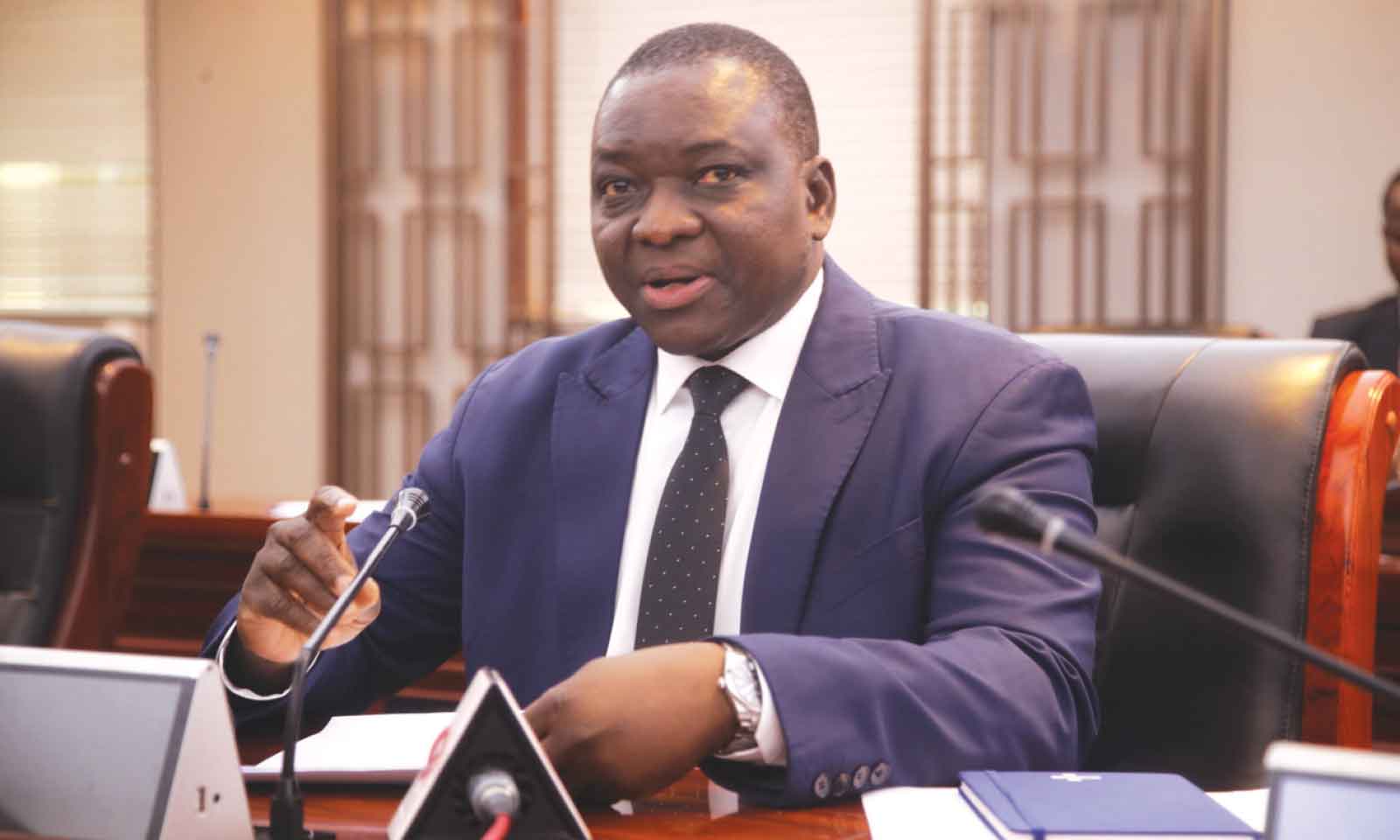
Speaking during yesterday’s Post-Cabinet Briefing in Harare, the Minister of Information, Publicity and Broadcasting Services, Soda Zhemu, said Cabinet noted and approved the framework as presented by the Minister of Finance, Economic Development and Investment Promotion, Professor Mthuli Ncube.
Min Zhemu said the initiative seeks to strengthen the existing Special Economic Zones framework under the Zimbabwe Investment and Development Agency (ZIDA) Act through decentralised industrial development, in line with the Government’s philosophy of “leaving no one and no place behind.”
“Government seeks to strengthen the existing framework for Special Economic Zones under the Zimbabwe Investment and Development Agency Act through the creation of a framework for provincial integration and decentralised industrial development,” he said.
“The envisaged benefits include accelerated industrialisation and value addition, promoting balanced regional development, enhanced investment attraction, employment creation and skills development, as well as improving Zimbabwe’s competitiveness in regional and global markets.”
Under the new framework, a network of specialised SEZs will be established across all provinces, beginning with Village Business Units and aligned to each province’s comparative advantages.
Min Zhemu also said the zones will be structured as complete industrial ecosystems comprising upstream production, midstream processing, downstream manufacturing, logistics, infrastructure and services.
“The model will ensure that Special Economic Zones do not operate as isolated industrial parks but as complete production and investment clusters,” he said.
The Integrated Provincial SEZ model is anchored on six strategic pillars, namely provincial comparative advantage, beneficiation and resource-based industrialisation, integrated industrial value chains, export-oriented production, public-private partnership development, and import substitution and domestic industrial deepening.
According to the framework, Harare Metropolitan Province will focus on financial services, ICT, pharmaceuticals, light manufacturing and business process outsourcing, while Bulawayo Metropolitan will prioritise agro-processing, tourism, renewable energy and diamond processing.
Midlands Province has been earmarked for steel and iron beneficiation as well as logistics services, while Mashonaland East will focus on lithium processing and agro-industrial development.
Matabeleland South will specialise in logistics, beef and leather production, and solar energy, while Matabeleland North will focus on energy, tourism and timber processing.
Min Zhemu said cross-cutting provincial industrial development strategies will include mineral beneficiation, agro-processing, logistics, tourism and energy-linked SEZs.
He added that successful implementation of the framework would depend on a sound governance and institutional structure comprising a National Licensing Authority and decentralised Provincial Licensing Committees.