
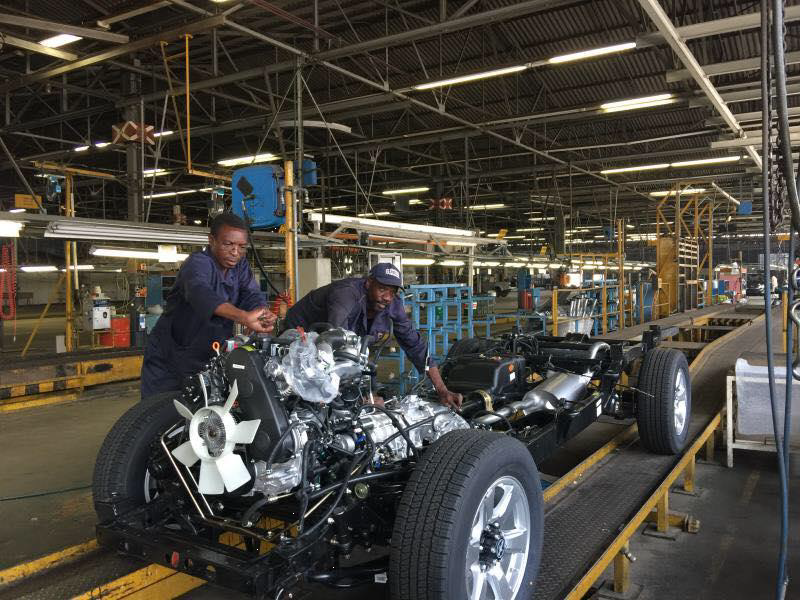
Zimbabwe is reviewing its Motor Industry Development Policy as part of an ambitious drive to reduce a vehicle and automotive components import bill of approximately US$700 million annually, revive local assembly operations and stimulate industrial growth.
The review of the Zimbabwe Motor Industry Development Policy (2018-2030) comes at a time when authorities are increasingly concerned about the country’s heavy reliance on imported second-hand vehicles and automotive components, a trend that continues to drain foreign currency reserves and weaken domestic manufacturing capacity.
Speaking during a stakeholder engagement meeting in Harare last Friday, Permanent Secretary in the Ministry of Industry and Commerce, Ambassador Tadeous Chifamba, said the substantial expenditure on imported vehicles presents a major opportunity for local industrial development.
“Research has shown that Zimbabwe spends more than US$600 million annually on vehicle imports, largely second-hand vehicles, and a further US$100 million on automotive components,” he said.
“This presents significant opportunities for import substitution, local assembly, component manufacturing, industrial upgrading and investment promotion.”
The Motor Industry Development Policy serves as Government’s blueprint for rebuilding Zimbabwe’s automotive manufacturing sector, promoting local assembly and strengthening downstream industries that supply vehicle components and related products.
Aligned with Vision 2030 and the country’s broader industrialisation agenda, the policy seeks to increase capacity utilisation in the automotive sector from approximately 10 percent in 2018 to full capacity by 2030. It also targets the creation of an estimated 20 000 direct and indirect jobs while increasing local procurement of automotive inputs from 10 percent to 40 percent.
Government believes greater local sourcing of products such as batteries, glass, tyres and other components will strengthen domestic value chains and reduce dependence on imports.
Ambassador Chifamba said the policy review is taking place against the backdrop of significant changes in the global automotive industry, which is increasingly shifting towards electric vehicles, digital technologies and environmentally sustainable production systems.
“The transition towards electric vehicles, smart manufacturing technologies, digitalisation, green industrialisation and resilient regional value chains is redefining global competitiveness and investment attraction,” he said.
“Countries that fail to adapt risk being marginalised from emerging regional and international automotive markets. Zimbabwe cannot afford to remain static.”
While the current policy has contributed to local assembly initiatives, component manufacturing, technology transfer and investment attraction, Ambassador Chifamba said evolving global trends necessitate a modernised policy framework.
“The review presents an opportunity to modernise the policy framework and ensure it remains responsive, forward-looking and aligned with emerging developments in the automotive sector,” he said.
Government wants the revised policy to position Zimbabwe as an active participant in regional automotive value chains rather than simply a destination for imported vehicles.
The automotive industry has been identified as a strategic sector due to its strong linkages with mining, steel manufacturing, engineering, plastics, rubber production, transport, logistics and energy.
“In pursuit of Vision 2030, the motor industry, particularly vehicle and bus value chains, has been identified as a strategic sector with immense potential to drive industrial transformation, technology transfer, manufacturing capacity, value addition and employment creation,” said Ambassador Chifamba.
Government, working closely with the Zimbabwe Investment and Development Agency, is also engaging local and international investors to expand opportunities in emerging areas such as electric vehicles, hybrid technologies and smart mobility solutions.
“With targeted investments, strategic partnerships and enhanced private sector participation, Zimbabwe has the potential to reposition itself as a competitive player in regional automotive manufacturing,” he said.
The success of the sector, he added, will depend on strong collaboration between Government, industry, financial institutions, academic institutions, research centres and development partners.
Government has pledged continued support through policy certainty, infrastructure development, investment facilitation, innovation support and industrial upgrading initiatives.
The policy review comes as Zimbabwe seeks to restore the fortunes of its once-vibrant vehicle assembly industry. Companies such as Willowvale Motor Industries and Quest Motors have already announced plans to resume or expand assembly operations as efforts to promote local manufacturing gather momentum.
At their peak, local assemblers produced thousands of vehicles annually while supporting extensive supply chains and employment opportunities. However, the sector declined over the years due to economic challenges and increased competition from imported second-hand vehicles.
Authorities are confident that a revitalised automotive industry can once again become a key pillar of Zimbabwe’s industrialisation and economic transformation agenda.