
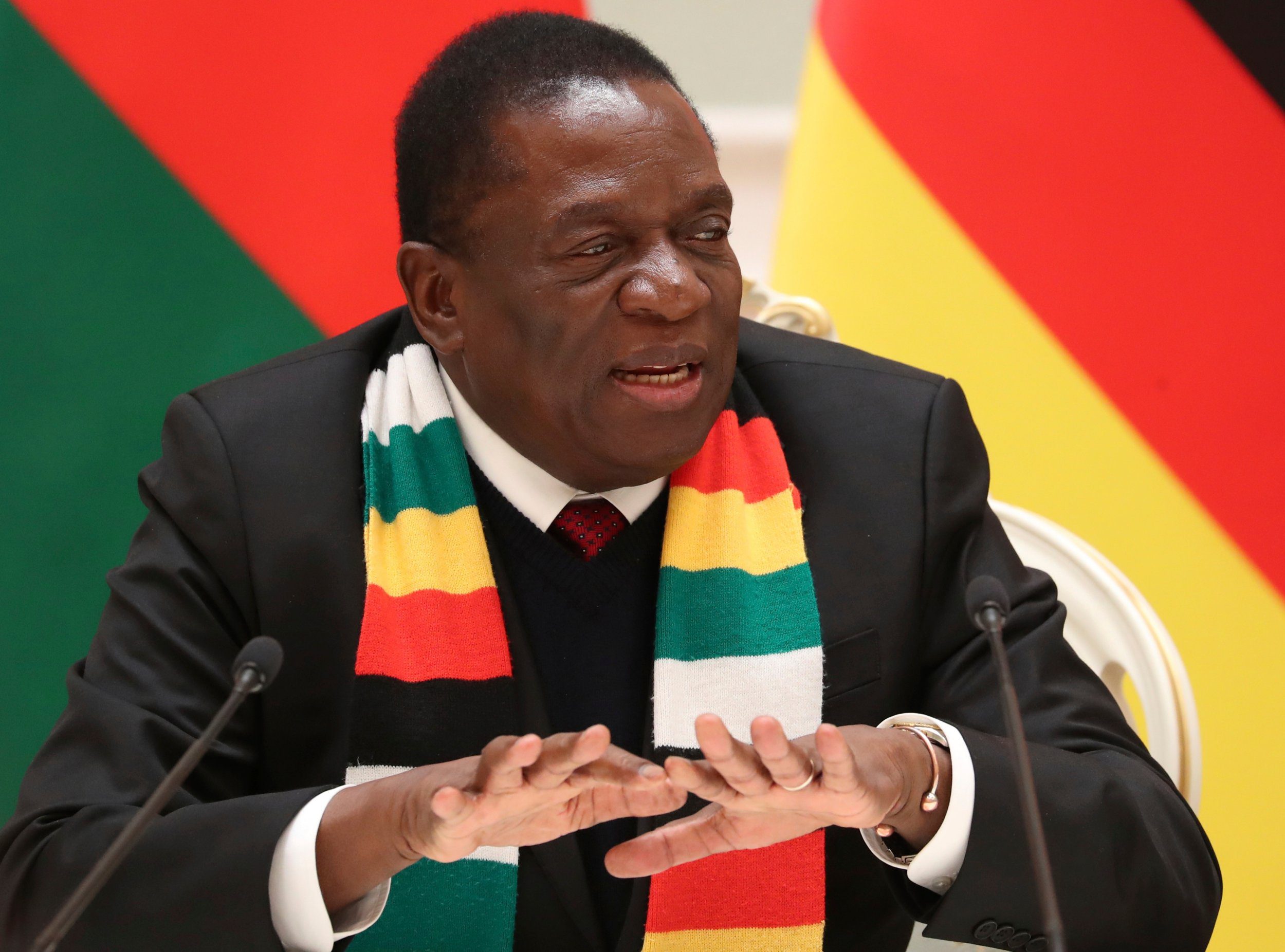
President Emmerson Mnangagwa has challenged Zimbabwe’s industrial sector to urgently reduce the country’s US$2.5 billion import bill by expanding local manufacturing, value addition and beneficiation.
Officially opening the inaugural Zimbabwe Industrialisation Conference and Expo (ZICE) 2026 in Harare, yesterday, President Mnangagwa said Zimbabwe possesses the skills, innovation and industrial capacity needed to transform its economy and become a competitive manufacturing hub for regional and international markets.
“The situation highlighted in the State of Industry Report, that the country is currently importing approximately US$2.5 billion worth of manufactured products which can be produced locally is untenable.
“Zvokwadi-Zvokwadi, Nyika inevanhu vakadzidza semi, tinema innovation hubs nema industrial parks kuma University, nema skills akawanda-wanda munyika totenga zvinhu chero, kwete! Izvi Minister Ndlovu, ngazvigadziriswe. Mari iyoyo, ngaishande muno munyika, ichitenga maproducts agadzirwa muno,” he added.
The President said there was an urgent need to scale up beneficiation, value addition, manufacturing and exports of processed materials across strategic sectors of the economy.
“The need to scale-up beneficiation, value addition, manufacturing and export of processed materials is now urgent. Minister Ndlovu, I am confident that through stronger synergies within the manufacturing and other sectors of the economy, more can be done to accelerate the realisation of set targets,” he said.
President Mnangagwa revealed that Zimbabwe’s industrial sector has recorded significant growth in recent years, with capacity utilisation increasing from 35% in 2019 to 61.2% during the first quarter of 2026. Manufactured exports have also risen from US$360 million in 2019 to US$584 million, while the manufacturing sector now contributes 17% to the country’s Gross Domestic Product.
“Additionally, the Study confirms that Zimbabwe’s industrial sector has demonstrated remarkable resilience, recording higher capacity utilisation, which is now at 61.2% in the first quarter of 2026, up from 35% in 2019.
During the same period manufactured exports also increased from US$360 million to the current US$584 million, reflecting improved value addition and beneficiation. The Manufacturing Sector now accounts for 17% of GDP. I applaud the sector for this phenomenal growth,” he said.
The President said Zimbabwe’s industrial transformation agenda should extend beyond import substitution to include high-value exports, export diversification and deeper regional integration through trade frameworks such as SADC, COMESA and the African Continental Free Trade Area.
“Focus must not only be on import substitution, but also on new economic drivers, trade in high value exports, regional integration and export diversification. We are not an island. Increasing trade within SADC, COMESA and the African Continental Free Trade Area is an obligation that should be given priority,” he said.
President Mnangagwa reiterated his Government’s firm policy position on value addition, warning against economic arrangements that fail to maximise benefits from Zimbabwe’s natural resources.
“As I have said in the past, my Government does not accept ‘horse and rider’ economic cooperation or investments, including from local manufacturing players.
Our policy stance is unequivocal. National resources must be processed and beneficiated for the realisation of maximum economic returns that benefit all our people, and the economy as a whole, not merely a few shareholders, directors and management,” he said.
President Mnangagwa concluded by assuring investors and industry players of continued policy certainty and an enabling business environment as Government strengthens industry financing mechanisms, infrastructure development and investment promotion initiatives to accelerate industrial growth and economic transformation.