
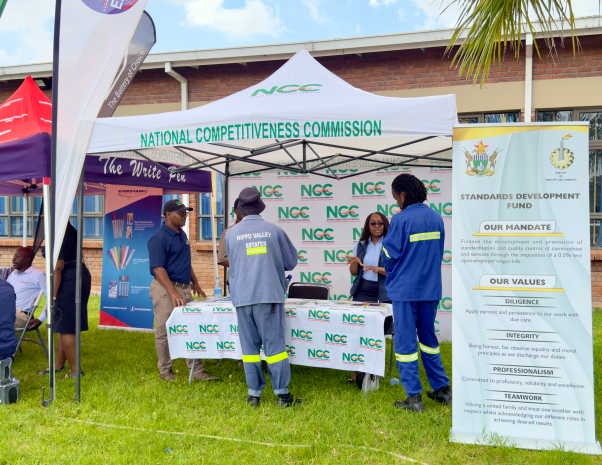
The National Competitiveness Commission (NCC) will next month convene the second Zimbabwe International Competitiveness Summit in Bulawayo, with regulatory reforms, artificial intelligence and the ease of doing business expected to dominate discussions on improving the country’s economic competitiveness.
The summit, scheduled for 15 and 16 September at the Zimbabwe International Exhibition Centre, will be held under the theme, “Accelerating Regulatory Reforms and Ease of Doing Business in a Dynamic and Competitive Zimbabwean Economy.”
In a statement, NCC said the summit would build on resolutions reached at the inaugural Zimbabwe Competitiveness Summit.
“The summit will build on resolutions reached at the inaugural Zimbabwe Competitiveness Summit with particular attention being paid to high business operating costs and a burdensome regulatory environment identified as major constraints to competitiveness,” said NCC.
The commission said discussions would focus on SMART Regulations — Streamlined, Meaningful, Adaptable, Relevant and Transparent — as well as Regulatory Impact Assessment and governance.
Artificial intelligence is also expected to feature prominently, with delegates examining its potential to drive industrial productivity and strengthen Zimbabwe’s competitiveness in an increasingly technology-driven global economy.
The summit will further consider Environmental, Social and Governance (ESG) issues and their implications for businesses and national competitiveness.
A key outcome of the meeting is expected to be the 2026 Competitiveness Call to Action, which will seek to consolidate expertise and galvanise stakeholders around measures to improve the competitiveness of Zimbabwean goods and services in domestic, regional and international markets.
The NCC also invited participants from the private sector, SMEs, Government, academia, development partners, civil society, local authorities, research think tanks and the media.
“The competitiveness of Zimbabwe will depend on effective implementation, institutional coordination, innovation and sustained effort to remove barriers to productive enterprise,” the commission said.
The summit comes as Zimbabwe continues efforts to improve its business environment and create conditions that support investment, production and the expansion of locally produced goods and services.