Vice President, General (Rtd) Dr Constantino Chiwenga, has called for urgent investment in climate-resilient agriculture, irrigation and value addition as Zimbabwe prepares for a potentially difficult 2026/27 summer cropping season.
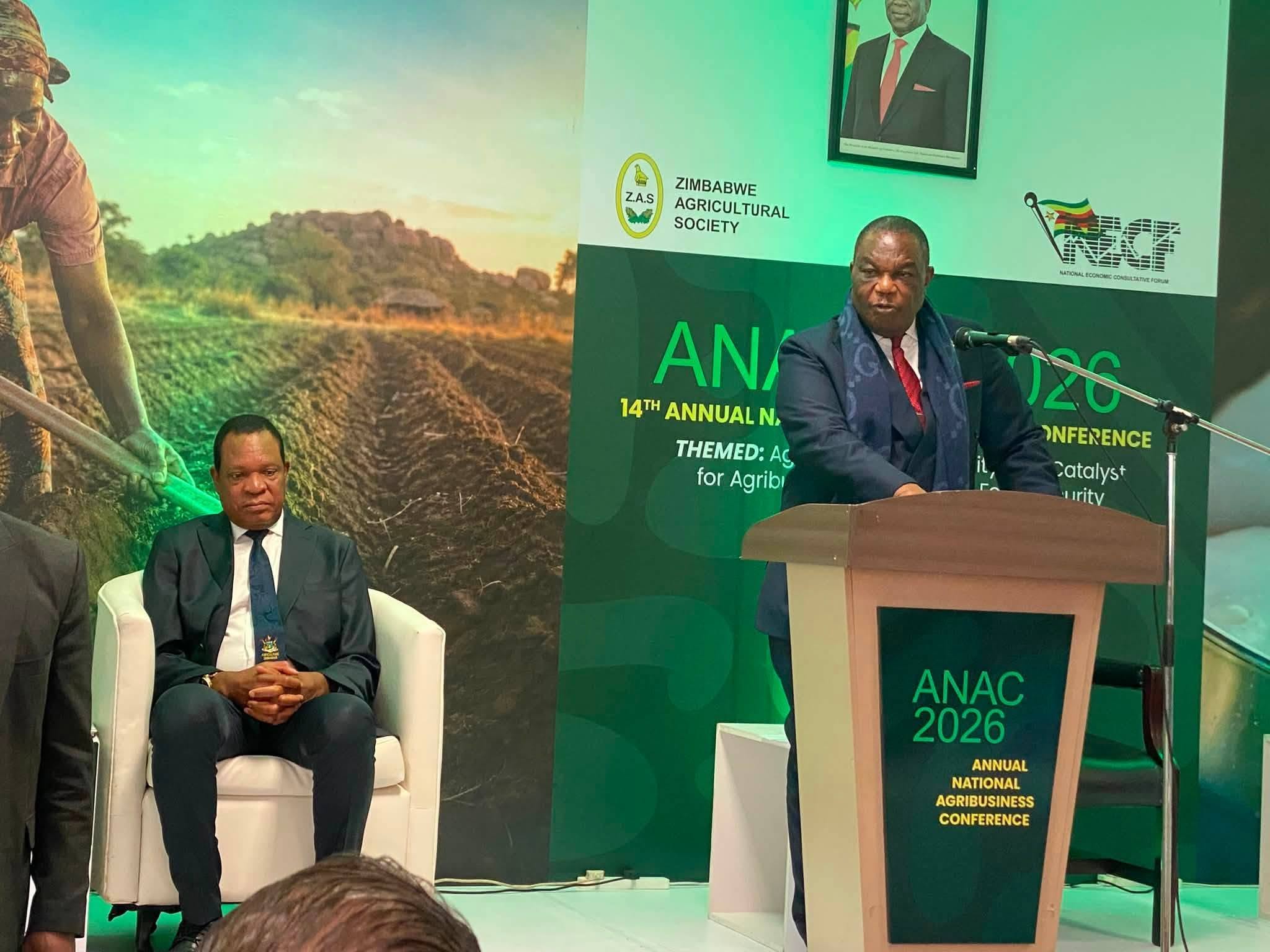
Addressing the 14th Annual National Agribusiness Conference at the Zimbabwe Agricultural Show in Harare, yesterday, Vice President Chiwenga said the country could no longer afford to approach agriculture solely from a production perspective.
“As we implement the National Development Strategy 2 (NDS2) for 2026–2030, agricultural productivity remains central to Zimbabwe’s pursuit of an empowered upper-middle-income society.
“Government will prioritise irrigation development, affordable agricultural finance, mechanisation, research and innovation, extension services, value addition and efficient agricultural markets to improve productivity and strengthen the sector,” Vice President Chiwenga added.
Chiwenga warned that climate change posed one of the greatest threats to agricultural production, with erratic rainfall, prolonged dry spells and rising temperatures requiring farmers to accelerate the adoption of climate-smart practices.
“The outlook for the 2026/27 summer season represents a critical stress test for Zimbabwe’s agricultural resilience,” he said.
He said geopolitical tensions were already exerting pressure on fuel and fertiliser prices disrupting supplies, while a forecast “Super El Niño” could worsen drought conditions in Southern Africa.
“The anticipated impacts include disruptions to food and water supplies and the likelihood of severe drought conditions, with no country able to assist another or acquire shortfalls from external supplementation,” Chiwenga said.
He urged farmers to conserve water, rehabilitate boreholes, expand irrigation and shift towards drought-tolerant crops such as sorghum, millet and sunflower.
“Government has developed an integrated response involving Treasury allocations, private-sector participation and specialised agricultural financing, alongside measures to ensure affordable inputs, strengthen early-warning systems, boost the Strategic Grain Reserve and introduce livestock drought mitigation measures,” he said.
Vice President Chiwenga also challenged farmers to move further into processing and value addition, saying production should increasingly be linked directly to industry and markets.
“I therefore call upon farmers to actively participate in the agriculture processing value chain, by producing and processing their products at source in order to reduce unnecessary costs.
Farmer-owned cooperatives could establish processing plants, supporting rural industrialisation and creating additional income opportunities,” he added.
He further stressed the importance of involving women and young people in transforming agriculture into a modern, profitable and technology-driven sector.
“Agricultural productivity remains central to Zimbabwe’s pursuit of an empowered upper-middle-income society,” he said.
The conference, jointly organised by the Zimbabwe Agricultural Society and the National Economic Consultative Forum, brought together policymakers, farmers, financiers, researchers and industry players to deliberate on strategies for increasing productivity, strengthening value chains and securing Zimbabwe’s food future.