Zimbabwe and Austria are moving to strengthen bilateral cooperation in renewable energy, tourism, health, pharmaceuticals and critical minerals, with the two countries also preparing to coordinate on key global issues ahead of their terms on the United Nations Security Council.
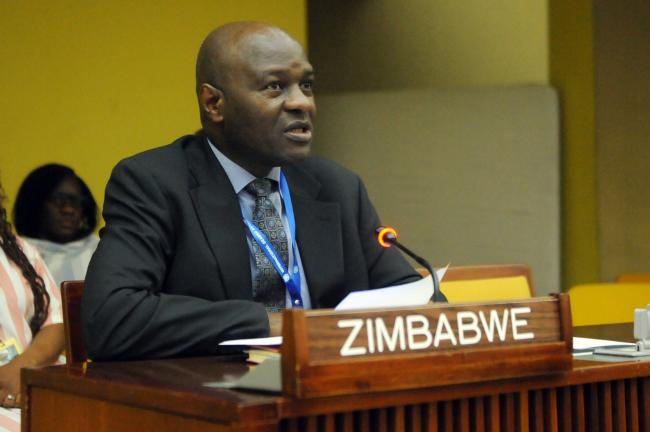
The development follows a meeting in New York between Secretary for Foreign Affairs and International Trade Ambassador Albert Ranganai Chimbindi and Austrian Vice Minister and Political Director at the Federal Ministry for European and International Affairs recently.
Ambassador Chimbindi said Zimbabwe was ready to expand practical cooperation with Austria across several sectors.
“We had very fruitful discussions with our Austrian counterparts, building on the high-level ministerial dialogues that we held in July.
We are now looking at how we can translate those discussions into a structured framework for bilateral cooperation,” he said.
He said renewable energy, tourism, health and pharmaceuticals were among the areas identified for stronger collaboration, while critical minerals would also be explored within Zimbabwe’s Special Economic Zones.
“We have identified a number of areas where we believe there is significant potential for cooperation, particularly in renewable energy, tourism, health, pharmaceuticals and critical minerals.
We want to see these areas being supported through a structured framework that can deliver tangible benefits to both countries,” Ambassador Chimbindi added.
A major development from the engagement was Zimbabwe’s readiness to reopen its Embassy in Vienna, which has been closed since 2014.
Ambassador Chimbindi said the reopening would restore Zimbabwe’s diplomatic presence in Austria and strengthen its engagement with United Nations agencies and other international organisations based in Vienna.
“Zimbabwe is at an advanced stage of readiness to officially reopen its Embassy in Vienna. This is an important step because Vienna is an important multilateral centre, hosting key United Nations agencies and international organisations. We want to restore our capacity for sustained engagement in that space,” he said.
The two countries will also assume non-permanent seats on the UN Security Council for the 2027–2028 term, after being elected by the General Assembly in June.
He said the two countries would further work together to address trade and connectivity challenges affecting landlocked developing countries under the Awaza Programme of Action.
“As a landlocked developing country, Zimbabwe attaches great importance to addressing trade and connectivity barriers.
We therefore look forward to working with Austria in advancing the objectives of the Awaza Programme of Action and ensuring that the concerns of landlocked developing countries remain visible on the international agenda,” he said.
Austria has identified partnerships with landlocked developing countries and implementation of the Awaza Programme of Action as areas of its multilateral engagement.