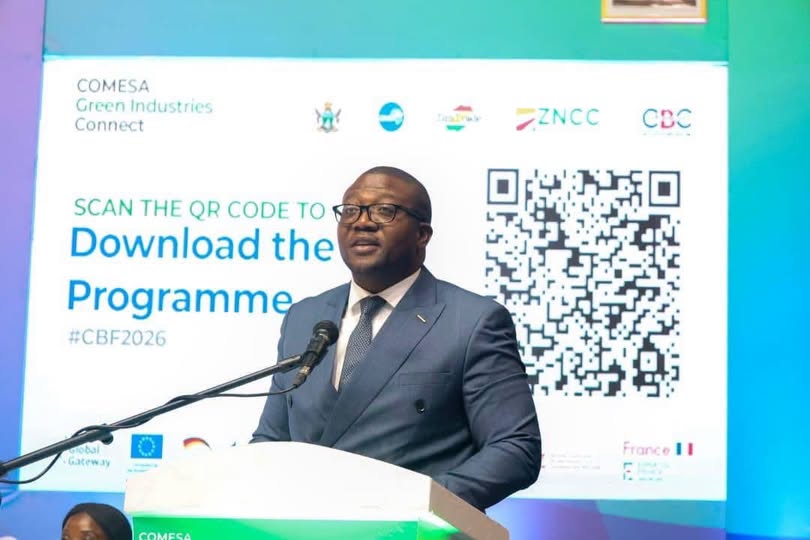
Minister of Industry and Commerce, Mangaliso Ndlovu, has called on COMESA member states to accelerate green industrialisation through investment in cleaner technologies, recycling infrastructure and regional value chains to boost manufacturing, create jobs and strengthen economic competitiveness.
Addressing the COMESA Green Industries Connect Conference in Harare, yesterday, Ndlovu said the region must move beyond policy commitments and implement practical initiatives that deliver tangible economic benefits.
“This gathering comes at a defining moment for our region, as we intensify efforts to expand manufacturing, mobilise investment, strengthen regional value chains and create sustainable employment.
“As COMESA member states, this conference must lead to a firm commitment to move beyond commitments and translate our shared industrialisation ambitions into concrete outcomes that deliver value to our economies and tangible benefits to our people,” he added.
Ndlovu said Zimbabwe’s industrialisation drive was anchored in Vision 2030, the National Development Strategy 2, the Zimbabwe National Industrial Development Policy 2 and the Local Content Strategy.
“Sustainable industrialisation is not separate from industrial growth; it is an essential condition for long-term competitiveness, resilience and productivity,” Ndlovu said.
He urged manufacturers to improve energy efficiency, recycle waste and optimise the use of raw materials, adding that Zimbabwe was working with the Climate Technology Centre and Network on a National Decarbonisation Roadmap for the cement sector.
“Recent investments in renewable energy, energy-efficient machinery and water-recycling systems are lowering production costs for manufacturing firms, improving reliability and strengthening industrial competitiveness,” he said.
Ndlovu also proposed the establishment of a COMESA Circular Economy Fund to finance enterprises investing in cleaner production, recycling infrastructure and energy-efficient equipment.
“I propose that COMESA explore the establishment of a COMESA Circular Economy Fund to support viable enterprises investing in cleaner production, energy-efficient equipment, recycling infrastructure and the conversion of waste into productive inputs,” he said.
Ndlovu said opportunities also existed in electric vehicle assembly, battery technologies and related manufacturing, while Zimbabwe’s shipment of locally processed lithium sulphate to China demonstrated the potential of value addition.
“As Zimbabwe assumes its COMESA Chairmanship, we stand ready to work with Member States, the COMESA Secretariat and the private sector to strengthen implementation of our shared industrialisation commitments,” he said.