Iranian singer Parastoo Ahmadi and four members of her production team have each been flogged 74 times after being convicted of producing and publishing online content deemed “obscene and immoral”, an Iranian news website reported on Monday.
The punishment was carried out following a court sentence linked to Ahmadi’s online performance in December 2024, according to Emtedad, which quoted lawyer Mostafa Nili.
Ahmadi and the four others were also handed two-year bans on artistic and musical activities and travel, the website reported. It did not specify whether Nili represented all five defendants.
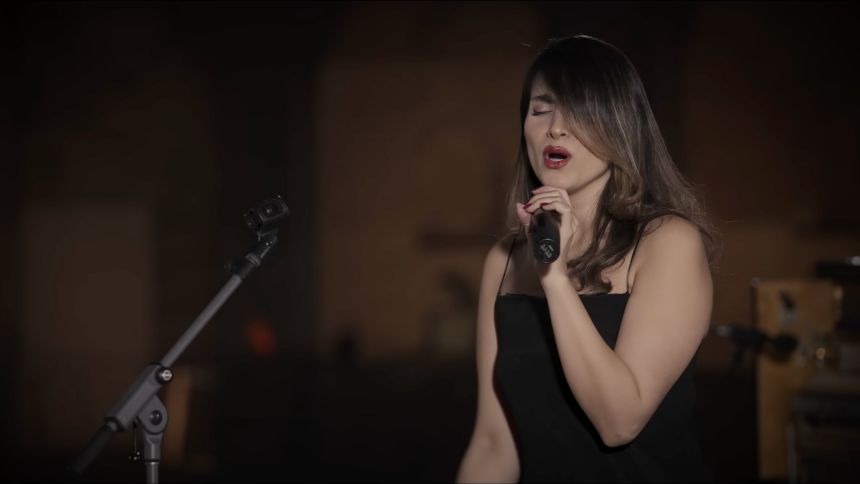
The case stems from a performance filmed and released on YouTube in December 2024, in which Ahmadi sang without the mandatory hijab alongside male musicians.
The concert was filmed at the historic Deir-e Gachin Caravanserai near Qom, a traditional resting place for travellers. It featured Ahmadi performing on a dimly lit stage with a large Persian carpet, without a live audience.
The singer wore a long black dress and appeared with her hair uncovered, in defiance of Iran’s compulsory hijab rules. The video was widely viewed online and drew attention to restrictions on women performers in the country.
According to earlier reports, Iran’s judiciary took notice of the performance, describing it as a violation of the country’s legal and religious standards. Authorities subsequently opened a case against Ahmadi and members of her production team.
The judiciary-affiliated Mizan News Agency had described the performance as an “illegal concert” that did not comply with Iran’s legal and religious standards.
Ahmadi and members of her team were prosecuted for “offending public decency” and for the production and dissemination of content described by authorities as vulgar and immoral.
A court sentenced the group to 74 lashes each in June, with the punishment reportedly upheld on appeal in September.
Earlier reports said nine people, including Ahmadi, musicians and members of the production team, had been sentenced in the case. It was not immediately clear whether the remaining four individuals had also received the punishment.
In October, Amnesty International urged Iranian authorities to halt the planned flogging, describing it as cruel, inhuman and degrading punishment.
Iran’s rules requiring women to cover their hair in public became a major flashpoint following nationwide protests in 2022 over the death of Mahsa Amini, a Kurdish Iranian woman who died in custody after being arrested for allegedly violating the dress code.
The protests triggered widespread calls for greater freedoms for women, including the right to choose whether to wear the hijab.
Since then, increasing numbers of women have appeared in public without headscarves, particularly in Tehran and other major cities. Enforcement of the rules has also become more selective.
Women in Iran face restrictions on public singing and performing, particularly solo performances. Ahmadi’s concert challenged both the mandatory dress code and restrictions on female performers.
Western governments and human rights organisations have criticised flogging as torture and a violation of international law.
Iran has rejected accusations over its human rights record, saying Western countries should address their own human rights problems.
_hindustantimes.com_