Zimbabwe’s transition to renewable energy must be anchored on community ownership, inclusive governance and stronger implementation systems if it is to deliver meaningful development outcomes, stakeholders have said.
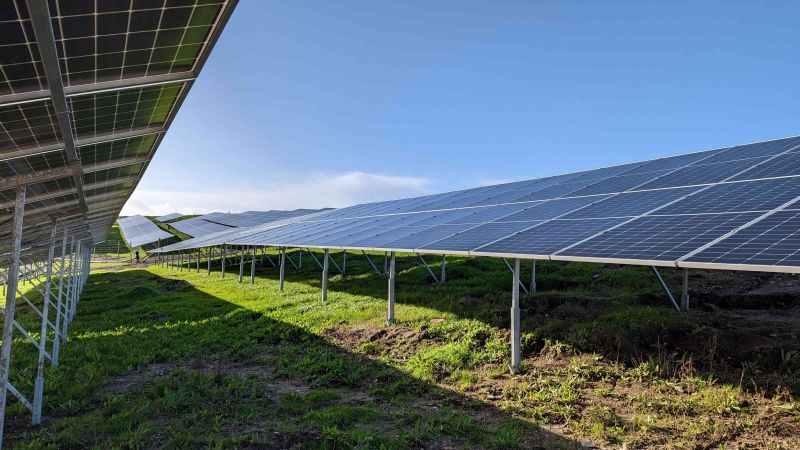
Experts and development practitioners say the country’s expanding renewable energy potential, including solar, hydropower, bioenergy and emerging technologies such as green hydrogen can only translate into broad-based benefits if local communities are actively involved in shaping, owning and benefiting from energy systems.
Speaking during the launch of a publication on renewable energy and climate governance convened by Green Governance Zimbabwe Trust (GGZT) and ActionAid Zimbabwe, GGZT executive director, Dr Paradzayi Tagwireyi said the energy transition must go beyond infrastructure expansion to fundamentally reshape ownership and governance structures.
He said renewable energy projects should not treat communities as passive beneficiaries, but as stakeholders with ownership rights.
“The future of sustainable energy in Zimbabwe lies not in technology deployment alone, but in community ownership of energy systems,” said Dr Tagwireyi.
“Renewable energy projects must not treat communities as passive recipients of infrastructure. They must be active owners, managers and beneficiaries of those systems. When communities have ownership, sustainability is guaranteed because they have a stake in protecting and expanding those systems.”
Dr Tagwireyi added that Zimbabwe’s energy transition should be viewed as a broader economic transformation agenda linked to industrialisation, job creation and improved livelihoods.
“Zimbabwe’s energy transition is fundamentally an economic transformation agenda. It is about industrialisation, job creation, energy security and improving livelihoods,” he said.
“Solar, bioenergy, hydropower and green hydrogen are strategic assets that must be deliberately integrated into national planning so that they contribute directly to development outcomes rather than existing as isolated projects.”
He also pointed to gaps between policy formulation and implementation, saying weak execution continues to undermine progress.
“We have strong policies on paper, but implementation is where the gap is,” he said. “Without strong accountability systems, coordination and financing that reaches the ground, policy ambition will not translate into real change in communities that are supposed to benefit from these interventions.”
ActionAid Zimbabwe country director, Dr Selina Pasirayi said renewable energy governance must explicitly address inequality and ensure inclusive participation in the energy transition.
“Good green governance is about recognising that social equity, ecological integrity and economic prosperity are not competing priorities. They are interconnected,” she said.
“Renewable energy must be designed in a way that deliberately includes women, young people and marginalised communities from the beginning, not as an afterthought.”
Dr Pasirayi said energy poverty continues to disproportionately affect women and girls, who often carry the burden of household energy needs while being excluded from decision-making processes.
“Energy poverty is not gender-neutral. Women and girls bear the burden of collecting energy, managing households and coping with the impacts of climate stress, yet they are often excluded from decision-making spaces where energy policies and investments are shaped,” she said. “That imbalance must be corrected if we are serious about a just transition.”
She added that gender-responsive approaches are central to effective climate action.
“For ActionAid, feminist principles are not an addition to climate action, they are fundamental to it,” said Dr Pasirayi.
“Without gender justice, there can be no lasting climate resilience, because inequality itself is a driver of vulnerability.”
Stakeholders at the event also called for improved access to climate and renewable energy financing at community level, and for greater inclusion of young people in innovation and decision-making within the energy sector.
They said a people-centred energy transition would ensure Zimbabwe’s renewable energy agenda delivers not only expanded energy access, but also broader social and economic transformation.