
The long-awaited Binga District School of Nursing is expected to open in January 2027 following ongoing refurbishment works at Binga District Hospital, in what is being viewed as a major breakthrough for healthcare delivery in one of Zimbabwe’s historically marginalised regions.
Deputy Minister of Health and Child Care Sleiman Kwidini said Government was making significant progress towards establishing the institution, which forms part of the broader Binga Development Initiative launched in line with President Emmerson Mnangagwa’s vision to modernise underserved communities.
Speaking after touring the hospital to assess ongoing works, Dep Min Kwidini said the ministry was working towards ensuring the nursing school becomes operational by early 2027.
“We have visited as the ministry to see what is needed there. As of now, we cannot say tomorrow or the day after tomorrow that the School of Nursing is going to be there, but plans are at an advanced stage to make sure that Binga District Hospital has a School of Nursing.
“If things work well, we think that by January 2027 it should be opening. There are so many things that need to be refurbished at Binga District Hospital. The refurbishment is underway as we speak.
“Definitely, if things go according to plan, by 2027 it will open. If things go the other way, we will try to make sure that by the end of 2027, the School of Nursing in Binga will be running,” he said.
The planned institution is expected to significantly strengthen healthcare service delivery in Matabeleland North Province, where communities have long grappled with shortages of trained nursing personnel, limited medical infrastructure and long travel distances to access health services.
For many years, residents in Binga have endured critical staffing shortages at local health centres, with some facilities operating under severe pressure due to limited manpower. Authorities believe the establishment of a local nursing school will help address these challenges by producing healthcare workers from within the community who are more likely to serve in rural areas after graduation.
The school is also expected to create opportunities for young people from remote communities who previously faced financial and geographical barriers to accessing professional nursing education.
Its establishment comes as Government intensifies efforts to decentralise nurse training institutions across Zimbabwe in order to bridge inequalities between urban and rural healthcare systems. Through the recently introduced quota-based enrolment system, training institutions are now expected to recruit at least 75 percent of students from their respective districts or provinces, a move designed to improve staff retention in underserved regions.
The Binga Nursing School project reflects a broader national effort to revive and expand healthcare training infrastructure.
In Matobo District, Tshelanyemba and Maphisa Primary Care Nursing Schools recently resumed operations after temporary closures caused by staffing and compliance challenges.
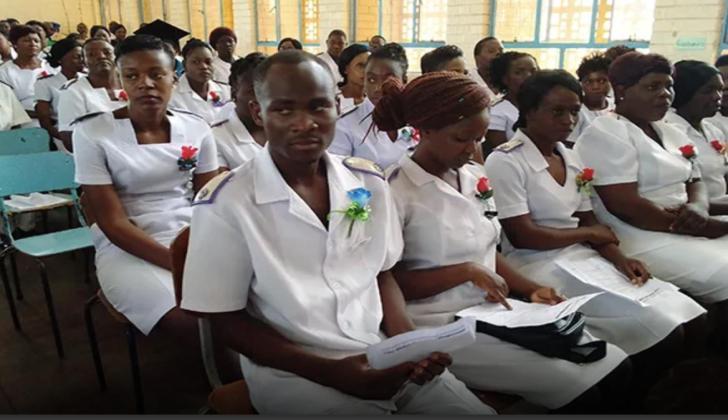
Meanwhile, the Tsholotsho School of Nursing recently marked a major milestone after graduating 45 students, its first graduating class since 2015 following years of operational setbacks.
The reopening and expansion of nursing institutions in rural districts are expected to play a critical role in strengthening Zimbabwe’s healthcare system, particularly at primary healthcare level where the demand for trained personnel continues to rise.