
Zimbabwe has taken a significant step towards implementing its national artificial intelligence agenda with the launch of the AI for Impact (AI4I) Challenge, a programme aimed at transforming policy ambitions into practical solutions for national development.
The inaugural challenge, scheduled to run in Mutare from 27 July to 1 August 2026, will bring together innovators, researchers, academics, industry leaders and government institutions to develop artificial intelligence-driven solutions to some of the country’s most pressing challenges.
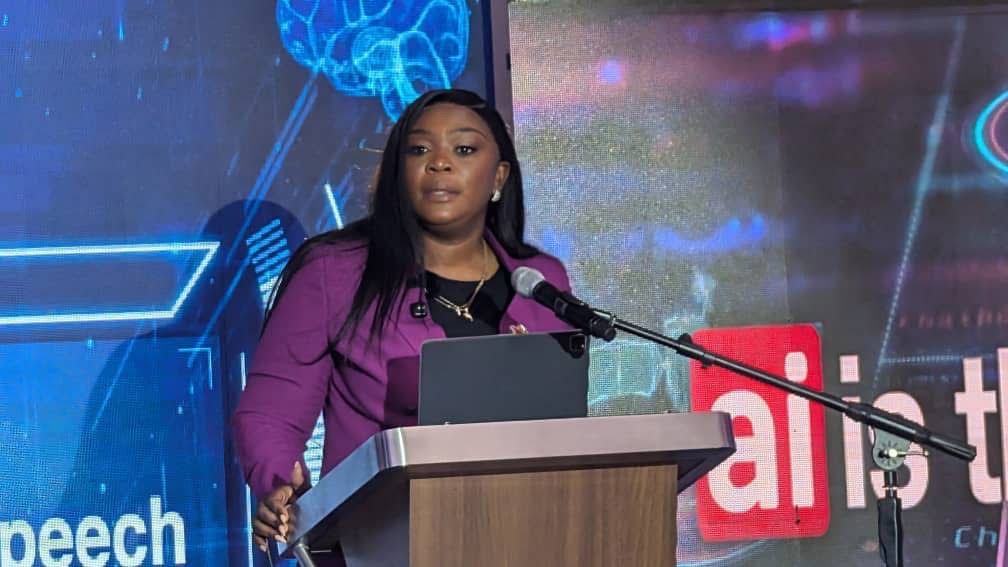
Speaking at a stakeholder breakfast meeting in Harare, Minister of Information Communication Technology, Postal and Courier Services, Tatenda Mavetera said the initiative is designed to operationalise the AI Grand Challenge outlined in Zimbabwe’s National Artificial Intelligence Strategy, which was launched by Emmerson Mnangagwa on 13 March 2026.
“AI4I has been conceived as the implementation framework for the AI Grand Challenge envisaged under the National AI Strategy. It represents one of the first major national programmes designed to translate the Strategy’s aspirations into measurable interventions,” said Minister Mavetera.
The week-long programme will challenge participants to collaborate in developing innovative AI-powered solutions to address national priorities. Teams will present their projects during a closing ceremony, after which Government will outline mechanisms to support and scale promising innovations.
Minister Mavetera said the launch marks Zimbabwe’s transition from developing AI policies to implementing them, following the establishment of key governance structures to guide the responsible adoption of the technology.
These include the Zimbabwe National AI Charter, which sets out principles for the ethical, transparent and accountable use of artificial intelligence, and the Terms of Reference for the National Digital Regulatory Committee, whose members are expected to be appointed soon. Government is also establishing an AI Strategy Implementation Office to oversee the execution of the national strategy.
“AI must be deployed not as an end in itself, but as a tool to create opportunities, improve productivity and enhance the quality of life for our citizens,” she said.
“As we move from policy to implementation, the question is how we translate strategic ambition into practical outcomes. The answer lies in building platforms that bring together problem owners, innovators, researchers, industry and government.”
The Minister urged the private sector, development partners and academic institutions to support the initiative, saying meaningful digital transformation can only be achieved through broad-based collaboration.
She also highlighted the role of the National Innovation Acceleration Centre in bridging the gap between innovative ideas and real-world implementation.
Invoking President Mnangagwa’s mantra, “Nyika inovakwa nevene vayo”, Minister Mavetera emphasised the importance of local ownership in Zimbabwe’s AI journey.
“Artificial Intelligence must carry Zimbabwean fingerprints, create Zimbabwean opportunities and strengthen Zimbabwean institutions as we pursue an upper-middle-income economy by 2030,” she said.
The Ministry said further details on participation requirements and priority sectors for the Mutare challenge will be announced through the Postal and Telecommunications Regulatory Authority of Zimbabwe and the forthcoming AI Strategy Implementation Office.
The AI4I Challenge is expected to become a flagship platform for harnessing local talent and innovation, accelerating Zimbabwe’s digital transformation agenda and ensuring that artificial intelligence contributes meaningfully to national development goals.