
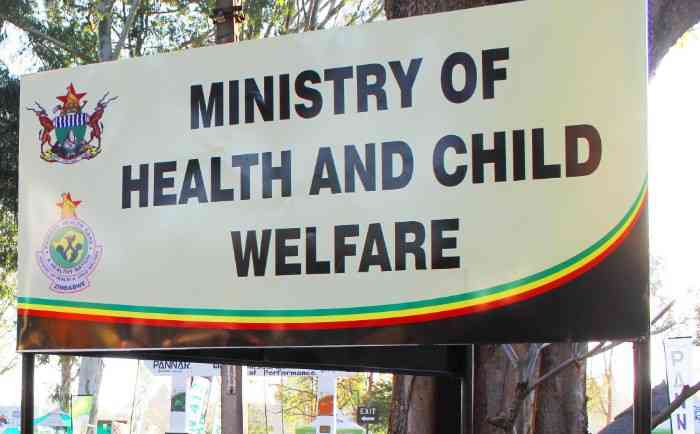
The Ministry of Health and Child Care launched the National Health Strategy (2026–2030), yesterday, in Norton.
Speaking at the launch, Minister of Health and Child Care, Dr Douglas Mombeshora, said the five-year strategy provides a comprehensive framework to improve health outcomes and ensure equitable access to quality healthcare services across the country.
“Today we officially launch the National Health Strategy 2026–2030, which sets out our vision for a healthier Zimbabwe.
Our priority is to reduce morbidity and mortality from communicable diseases, non-communicable diseases and mental health conditions while ensuring that every Zimbabwean has access to quality, affordable healthcare,” said Dr Mombeshora.
He said the strategy places particular emphasis on improving reproductive, maternal, newborn, adolescent and child health as Government intensifies efforts to reduce preventable deaths.
“We are targeting significant reductions in maternal and perinatal mortality while increasing the prevalence of modern contraceptive use.
Protecting the health of mothers, newborns, children and adolescents remains at the centre of this strategy because healthier families are the foundation of national development,” he added.
Dr Mombeshora said ensuring the uninterrupted availability of medicines and other essential health commodities would be a key priority over the next five years.
“Our goal is to increase the availability of medicines and health commodities so that no patient goes without the treatment they need.
Access to essential medicines is a fundamental component of quality healthcare and we are committed to strengthening procurement and supply systems,” he said.
The Minister said Government also intends to increase domestic health financing to at least 15 percent of total Government expenditure while reducing the financial burden on patients.
“We are committed to mobilising greater domestic resources for health and reducing out-of-pocket payments so that financial constraints do not prevent citizens from accessing healthcare services,” he said.
To address shortages of healthcare professionals, Dr Mombeshora said Government plans to create 32,000 new health sector posts by 2030 to improve staffing levels in line with recommended international standards.
“The strategy also seeks to modernise health infrastructure by ensuring every district has a fully equipped hospital, while all health facilities will have reliable water and electricity supplies.
We will also expand digital health by connecting all health facilities to the internet and integrating health information systems to improve efficiency, decision-making and service delivery,” he said.
The National Health Strategy aligns with Zimbabwe’s Vision 2030 and is expected to guide investments and reforms aimed at delivering a resilient, efficient and people-centred healthcare system.