
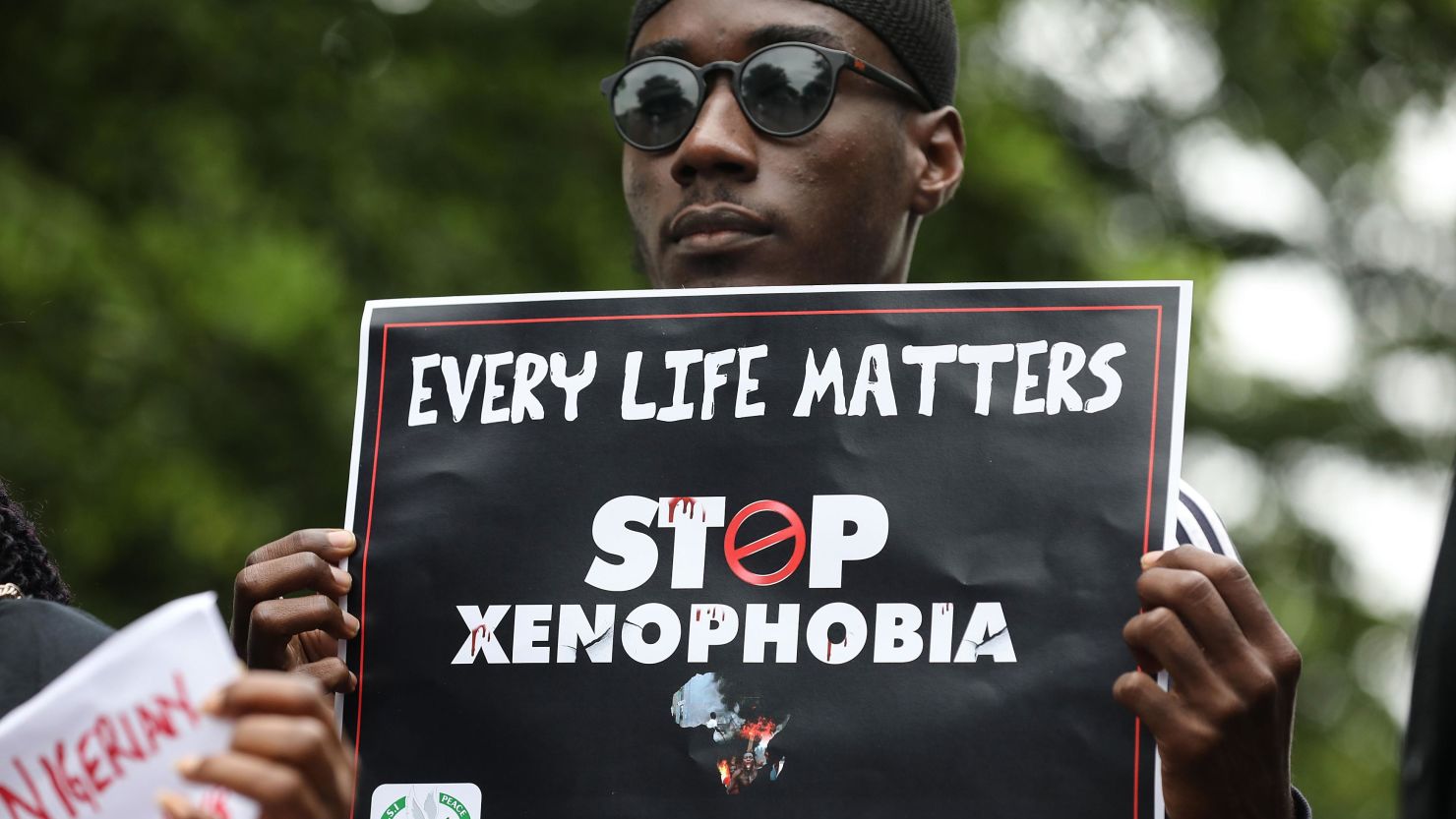
The Federal Government has warned that it may review some of the privileges enjoyed by South African businesses and nationals in Nigeria following the latest wave of xenophobic attacks against Nigerians living in the country.
Minister of Foreign Affairs, Ambassador Bianca Odumegwu-Ojukwu, disclosed this after briefing State House correspondents at the Presidential Villa, Abuja, following a meeting with President Bola Tinubu.
According to the minister, Abuja is dissatisfied with what it described as the weak response of South African authorities to the repeated attacks on Nigerians and other African migrants.
She said reports from South Africa showed that Nigerians were being harassed, while their homes and businesses were coming under attack.
“Our citizens are being harassed. Our citizens’ properties are being looted. Criminal actions are being perpetrated, and the police refuse to do anything. The South African government has not come out strongly and firmly enough to condemn these incidents.”
Odumegwu-Ojukwu also dismissed claims that Nigerians affected by the attacks were undocumented migrants.
She insisted that many of them are legally resident in South Africa and operate legitimate businesses, yet they have continued to face intimidation and violence.
“To say that Nigerians who are in South Africa doing legitimate business are illegal migrants is absolutely untrue. People who are doing legitimate business have their shops looted, their shops set on fire. Children cannot go to school because they are intimidated in their schools.”
The minister said the development was particularly painful because of Nigeria’s historical support for South Africa during the anti-apartheid struggle.
She recalled that Nigeria committed resources to the liberation movement and provided educational opportunities for South African students during that period.
“Nigeria is not happy with South Africa. Nigeria sacrificed much for the South African struggle for independence. Nigeria committed funds, committed resources. In schools, seats were reserved for South African students.
“My own generation, we carried placards, we demonstrated in front of South African assets. Sometimes we even got arrested for doing this. Nigeria is a serious frontline state, and Nigerians are not happy about how they have been treated.”
She further argued that the attacks appeared to be targeted mainly at black African migrants.
“They are not asking other migrants to leave. They are only asking black migrants to leave.”
Speaking on possible retaliatory steps, the minister said the Federal Government was weighing its options and that stronger diplomatic actions had not been ruled out.
“That is a situation that we are considering.