
President Emmerson Mnangagwa has ordered a shift towards local processing of agricultural produce. He said this on the official opening of the 116th Agricultural Show.
President Mnangagwa said his administration would use the National Development Strategy 2 (NDS2) to accelerate agro-industrialisation.
“Under NDS2, we will no longer export opportunities, jobs and value of our products, which are often exported as raw materials with Special Agro-Processing Zones to be established in all 10 provinces,” he said.
The President said the country must transform agricultural commodities into finished products locally.
“There is need to move from raw soyabeans to cooking oil and stock feeds; raw milk to cheese and yoghurt, fruits to juice and concentrates, tobacco leaf to cigarettes, cattle to leather and packaged meat. All agriculture produce must be processed locally,” he said.
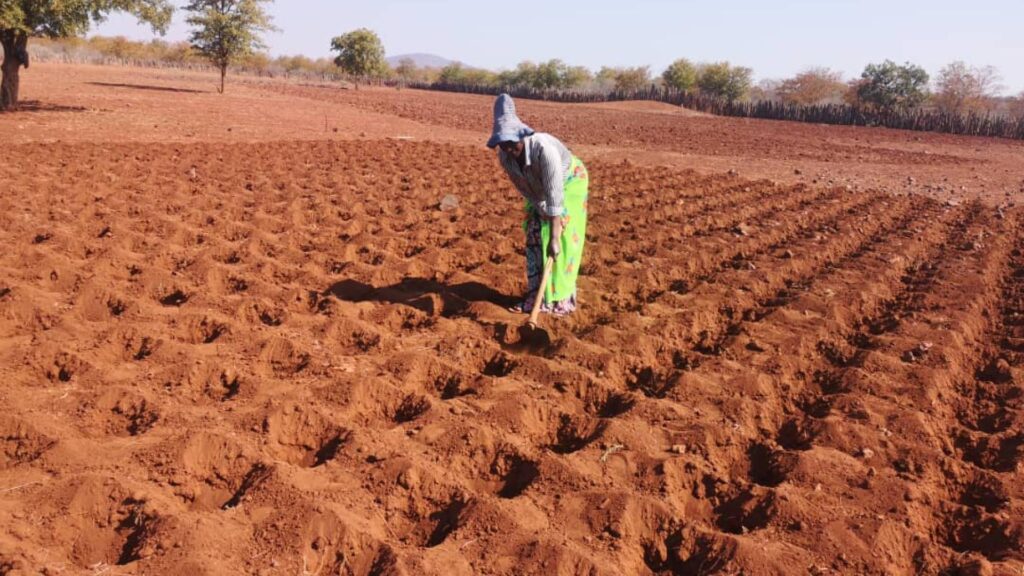
President Mnangagwa said the strategy would also target more than 1.8 million smallholder farmers.
“Smallholder farmers should be integrated into commercial value chains through contract farming, the Zimbabwe Mercantile Exchange, the Agricultural Finance Corporation and the Credit Guarantee Scheme.
Agriculture has become the engine of industrialisation, driver of exports, and foundation of food security and self-sufficiency, as well as empowerment and employment creation,” he added.
The President highlighted recent gains in the sector.
“Zimbabwe has achieved wheat self-sufficiency in 2023, 2024 and 2025, with last year’s harvest reaching 375 000 tonnes. Maize production recovered from the 2024 drought to reach 2.3 million tonnes in 2025, restoring the Strategic Grain Reserve, while agricultural exports had risen above US$2.1 billion.
“Tobacco production, has reached more than 358 million kilogrammes during the 2025/26 marketing season, generating over US$892 million and providing employment to more than 500 000 people across the value chain,” he noted.
President Mnangagwa, however, said increased production alone was no longer sufficient, challenging farmers to pursue increased and consistent high output, transformation and value addition.
“The Agricultural sector should embrace technology, including artificial intelligence, precision farming, soil sensors, satellite monitoring, drones and digitised extension services. Innovation, technology, research and development are no longer optional,” he said.
As Zimbabwe prepares for the 2026/27 farming season, President Mnangagwa said, “Government is rolling out a National Early Warning System and index-based insurance programme to strengthen disaster preparedness and reduce risks faced by vulnerable communities.
Government will also expand irrigation, mechanisation, cold-chain infrastructure and storage facilities, while each village is earmarked to have access to a tractor and other agricultural equipment,” he concluded.
The 116th Zimbabwe Agricultural Show is being held under the theme, “Powering Growth: Where Agriculture, Technology and Commerce Converge.”
The annual exhibition brings together farmers, businesses, financial institutions, technology innovators and policymakers to showcase developments across the agricultural sector.