The University of Zimbabwe (UZ) is emerging as a key player in Zimbabwe’s drive for local production and import substitution, with its Agro-Industrial Park now producing about 20 000 loaves of bread and 4 000 litres of cooking oil daily.
The development reflects the growing role of tertiary institutions in translating academic research and innovations into commercial products while contributing to national economic development.
The Agro-Industrial Park has adopted a full value-chain approach, with production extending beyond bread and cooking oil to include stock feed and other products that are finding their way into the market.
UZ Vice Chancellor Professor Paul Mapfumo said the institution was steadily increasing production capacity while ensuring that its products responded to market demand.
“We are now at a production capacity of at least 20 000 loaves of bread per day, but that is not all we are doing; we are also producing cooking oil and stock feed, and all these products have found a place in the market and the markets have responded well,” he said.
The developments at UZ are part of the broader implementation of the Heritage-Based Education 5.0 Model, which seeks to move tertiary education beyond the traditional focus on teaching and research towards innovation, industrialisation and commercialisation.
Incubation hubs established at tertiary institutions are playing a critical role in bridging the gap between research and the market, particularly for young innovators who often struggle to secure funding, access markets and develop viable commercial enterprises.
Robestos director Annastancia Mazhindu said the incubation hub had helped her company overcome some of the barriers that had previously prevented its products from reaching the market.
“We are from Mbire and we were finding trouble accessing funding and even the markets. The idea was there and it was great, but we had no market access. Through this Incubation Hub, we are now penetrating,” she said.
Atric Biosciences lead researcher Dr Joey Chifamba also said the initiative had significantly improved the organisation’s ability to commercialise its research.
“The incubation hub has really helped us as Atric Biosciences; we are doing a lot in terms of applied research. Commercialisation was a serious challenge, but this hub has made us reach greater heights,” he said.
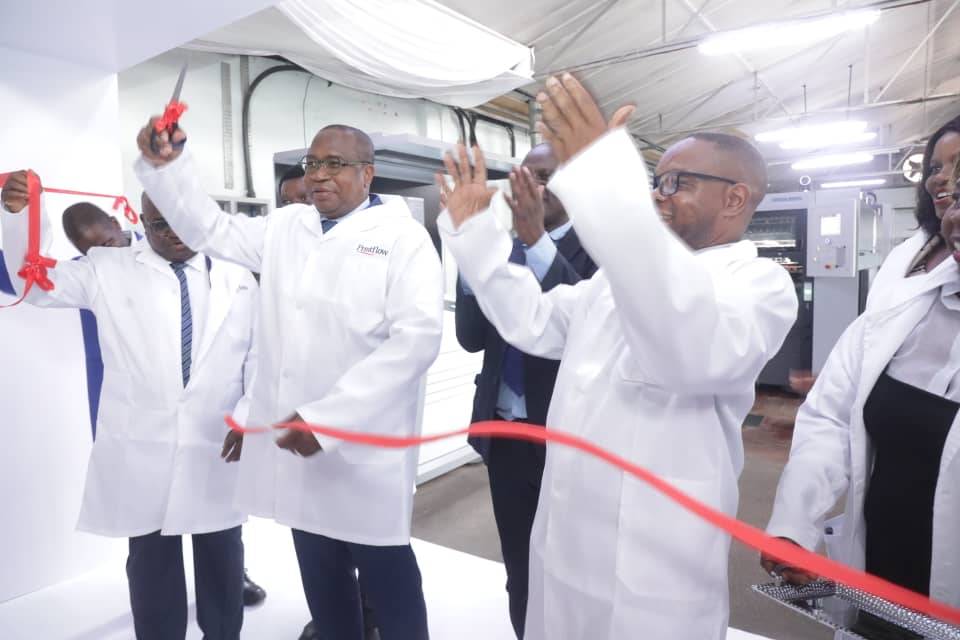
The developments were showcased yesterday when the ZANU PF Politburo toured the University of Zimbabwe’s Incubation Hub, which was commissioned by President Emmerson Mnangagwa in July.
The delegation also toured the Agro-Industrial Park, where it assessed the institution’s progress in implementing the Education 5.0 model.
ZANU PF Secretary-General Advocate Jacob Mudenda said the party was impressed by the university’s efforts to translate Government policy into tangible production.
“Zimbabwe has taken a leading role in development across Africa, but we must continue to ensure that we read; we must instil a culture of reading amongst our people because when we read, we lead,” he said.
“We were very impressed by what we saw here because, as ZANU PF, we have a policy on education and we are happy that it is a policy in action.”
ZANU PF Secretary for Information and Publicity Ambassador Christopher Mutsvangwa said the projects demonstrated the capacity of Zimbabweans to drive national development through innovation and enterprise.
“This is exactly what the President has always preached: that a country is built by its own people; as such, we are impressed that these young people are doing a lot to build Zimbabwe,” he said.
With the Agro-Industrial Park supplying products directly to the market, UZ is increasingly positioning itself as more than an institution of learning, but as an engine for value addition, job creation, industrialisation, food security and import substitution.
The model is also expected to provide students and researchers with practical platforms to develop innovations into commercially viable enterprises, strengthening the link between education, industry and national development.