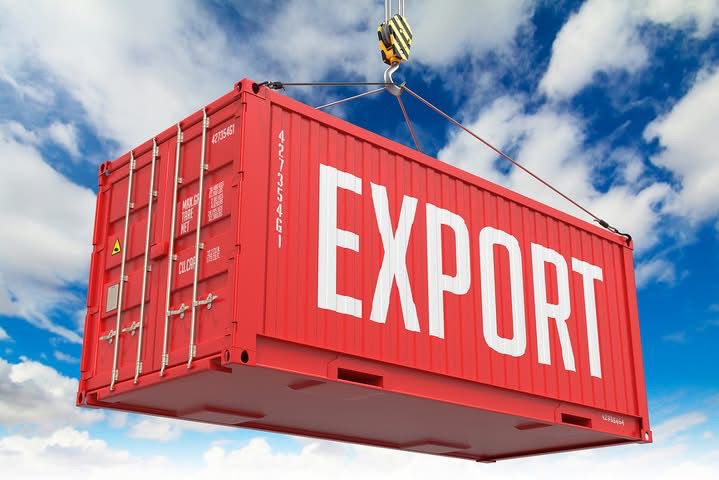
Zimbabwe’s export earnings reached US$9.7 billion in 2025, reflecting strong growth driven by value addition and beneficiation initiatives under the Second Republic. The expansion highlights the country’s increasing presence in regional and international markets as the Government intensifies support for small and medium enterprises (SMEs) and export-oriented production.
Authorities say value addition remains central to Zimbabwe’s development agenda, as it enables the nation to derive greater returns from manufactured products and its rich mineral-resource base. Industrialists are responding by scaling up production and widening market access, supported by favourable policies and export incentives.
Among the beneficiaries is businessman Davison Norupiri, whose export footprint now spans Malawi, Zambia, South Africa and Botswana.
Across sectors from manufactured goods and handicrafts to horticulture and floriculture, Zimbabwean products continue attracting robust demand abroad.
Chief executive of Tangle Flora, Lillian Chinamasa, said European markets were showing heightened interest in Zimbabwean flowers.
“We have had tremendous interest from the Netherlands, following market linkages facilitated by ZimTrade,” she said.
Handicraft producers are also breaking new ground. The Lupane Women Development Trust reported significant growth in overseas markets.
“Our products have made inroads in Germany, the United Kingdom, Turkey and Spain. Our handicrafts are highly competitive, giving us an edge,” said chairperson Mrs Hildergard Mufukare.
President Emmerson Mnangagwa urged exporters to embrace innovation, digital tools and new technologies to drive sustainable export growth.
“Under National Development Strategy 2 (NDS2), export growth must be inclusive and improve quality of life. Our philosophy is ‘leaving no one and no place behind,’” he said.
He noted that opportunities must be expanded to SMEs, cooperatives, youth and women-led enterprises, rural producers and community-based industries, supported by ZimTrade’s cluster-development programmes that integrate communities into export value chains.
The President emphasised that innovation, science, technology and research would continue to anchor Zimbabwe’s economic transformation.
“There is a need for deliberate programmes to improve the use of digital platforms and technologies to grow our exports,” he said.
Government has also accelerated ease-of-doing-business reforms aimed at strengthening competitiveness and boosting profitability for exporters.
With export receipts rising steadily in recent years, projections indicate that Zimbabwe could surpass the US$9.7 billion achieved in 2025, as value addition and beneficiation efforts gain further momentum heading into 2026.