The Grain Marketing Board (GMB) has activated 1 804 mobile grain buying points across Zimbabwe as the parastatal moves to cope with a 122 percent surge in grain deliveries following last season’s bumper harvest.
The expansion of the mobile buying network complements the GMB’s 89 fixed depots and is aimed at bringing formal grain marketing services closer to farmers, particularly those in remote communities.
The move is expected to reduce the distance farmers have to travel to deliver their produce while ensuring that increased agricultural output is channelled into the formal market.
The surge in grain deliveries has been attributed to two consecutive seasons of favourable rainfall, which have significantly improved agricultural production and boosted maize and traditional grain yields.
GMB chief executive officer Dr Edson Badarai said the board had deliberately expanded its buying network to match increased production with accessible marketing services.
“One of our major priorities this season has been to bring GMB services closer to farmers. We have activated 1 804 mobile buying points across the country to complement our network of 89 fixed depots,” he said.
Dr Badarai said the board wanted grain marketing services to be accessible in every ward, adding that transport costs should not prevent farmers from participating in the formal market.
“Our goal is to make grain delivery accessible in every ward and to ensure that transport does not become a barrier to farmers participating in the formal market,” he said.
To strengthen the logistics chain, the GMB has deployed 40-tonne trucks to collect grain from farms and communities and transport it to storage facilities.
The parastatal is also engaging third-party transporters to supplement its fleet and address logistical challenges arising from increased deliveries.
Maize deliveries are being led by Mashonaland West, followed by Mashonaland Central and Midlands, while Masvingo is accounting for more than half of the country’s traditional grain intake.
The increased harvest comes as the GMB continues to expand its storage infrastructure.
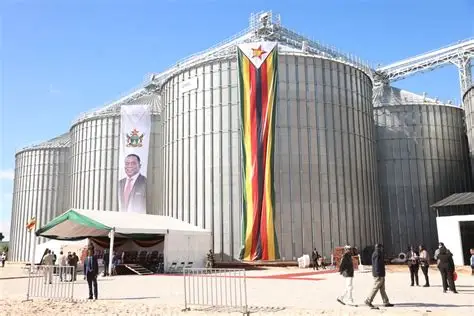
The board currently operates 12 silo depots with a combined capacity of 750 000 tonnes, alongside 63 depots equipped with sheds and hardstands.
Fourteen new artificial-intelligence-driven silos are also being constructed, with facilities in Kwekwe and Mutare already commissioned.
The new investments have raised current silo capacity to 862 000 tonnes. Each of the 14 new silos is designed to accommodate 56 000 tonnes, meaning total capacity is expected to reach approximately 1.53 million tonnes once all the facilities are completed.
“This investment is significant because it ensures that increased agricultural production is matched by adequate post-harvest infrastructure,” Dr Badarai said.
The GMB is also seeking to improve farmer confidence in the formal grain market by ensuring timely payments.
Dr Badarai said farmers were being paid within a maximum of 14 days after delivering their grain.
For the current summer season, the GMB has so far paid farmers ZiG267.3 million and US$29.5 million after clearing outstanding payments from the previous winter season.
The expansion of buying points, transport capacity and storage infrastructure is expected to strengthen Zimbabwe’s grain marketing system while supporting Government’s broader food-security objectives.