
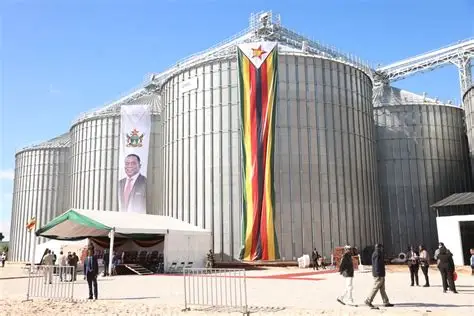
The Government has paid more than US$22 million to farmers through the Grain Marketing Board (GMB), as Zimbabwe’s Strategic Grain Reserve reached 187,245 tonnes.
Providing the update, yesterday, the Minister of Lands, Agriculture, Fisheries, Water and Rural Development, Anxious Masuka, said weekly disbursements were continuing to clear outstanding balances owed to producers.
“The Grain Marketing Board has paid over US$22 million to farmers, and Treasury continues to release resources on a weekly basis to ensure that all outstanding payments are honoured,” Dr Masuka said.
He said the payments were part of Government’s broader efforts to support agricultural production and maintain confidence among farmers supplying grain to the national reserve.
“It is critical that farmers receive their payments on time, as this strengthens their capacity to reinvest in production, procure inputs, and prepare for subsequent seasons,” he said.
Meanwhile, Dr Masuka said the Strategic Grain Reserve now stands at 187,245 tonnes, comprising 113,751 tonnes of wheat, with the balance made up of maize and traditional grains.
“The current stock position reflects continued deliveries and prudent management of national grain resources. Wheat constitutes a significant portion of the reserve, while maize and traditional grains provide additional food security buffers,” he said.
He noted that the grain reserves play a vital role in stabilising the country’s food supply, particularly in the face of climate variability and shifting seasonal patterns.
“The Strategic Grain Reserve remains a cornerstone of Zimbabwe’s food security framework. It enables Government to respond effectively to potential supply shocks, drought conditions, and other unforeseen challenges,” Dr Masuka said.
The Minister added that the update comes as the Zimbabwe National Statistics Agency nears completion of the first round of crop, livestock and fisheries assessments.
“These assessments are essential in providing an evidence-based outlook on the agricultural season. They guide policy decisions, resource allocation, and planning interventions across crop production, livestock performance, and fisheries,” he said.
Dr Masuka expressed optimism about the agricultural sector, citing improved farmer participation and ongoing Government support programmes.
“We continue to see encouraging activity across the sector, supported by targeted financing mechanisms, input schemes, and infrastructure investments. Government remains committed to ensuring sustainable agricultural growth,” he said.
Zimbabwe maintains the Strategic Grain Reserve as part of its national food security strategy, ensuring adequate stocks of staple grains to cushion against production shortfalls. The Grain Marketing Board serves as the primary institution responsible for grain procurement, storage, and distribution.